
School of Physiotherapy
- Home
- Faculties
- Medical, Allied and Healthcare Sciences
- School of Physiotherapy
- Physiotherapy PhysioPrenure
Prototype/Process Design & Development “PhysioPrenure-II”
Objectives
- To introduce physiotherapy students to the concept of PhysioPreneurship and innovation in healthcare.
- To create awareness about prototype and process design & development in physiotherapy practice.
- To encourage students to explore entrepreneurial opportunities beyond conventional clinical roles.
- To bridge the gap between academic learning and industry applications.
- To motivate students towards innovation, start-up culture, and leadership in physiotherapy.
- PO1 – Demonstrate competencies to provide quality care to the individuals and populations to optimize their movement, function, and quality of life.
- PO5 – Demonstrate abilities to communicate effectively to augment therapeutic and professional relationships.
- PO8 – Exhibits commitment towards continuous learning and scholarly activities.
Summary
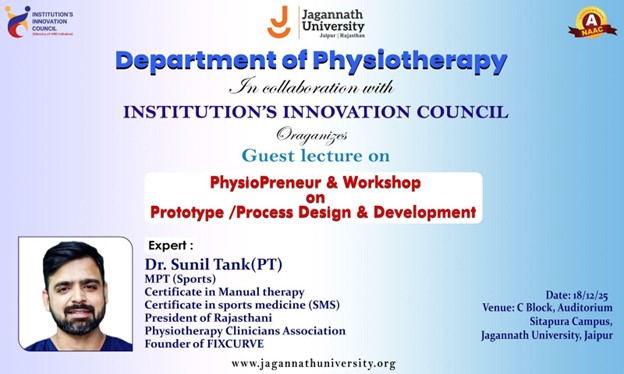
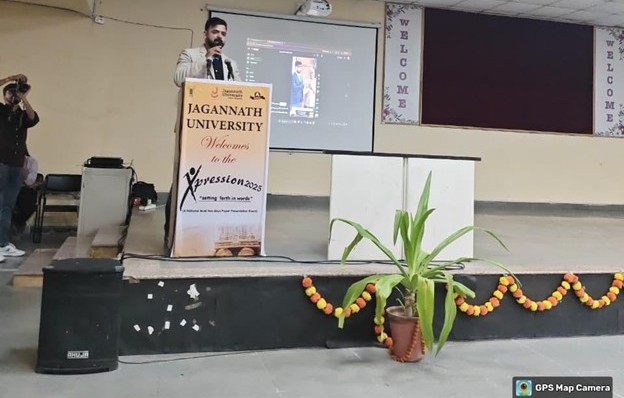
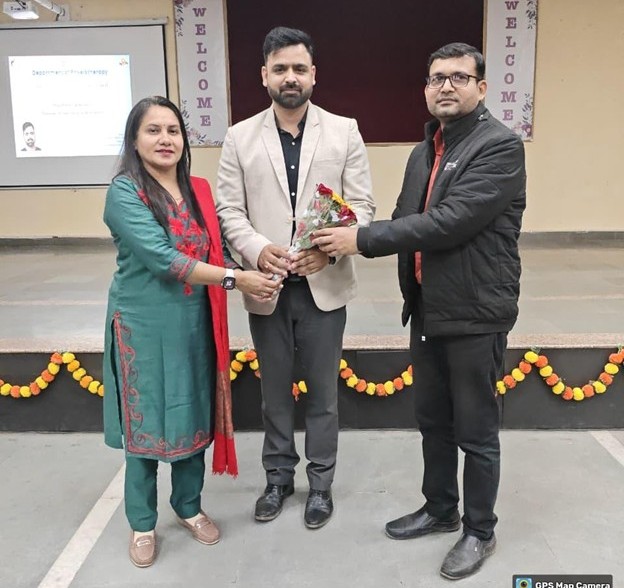
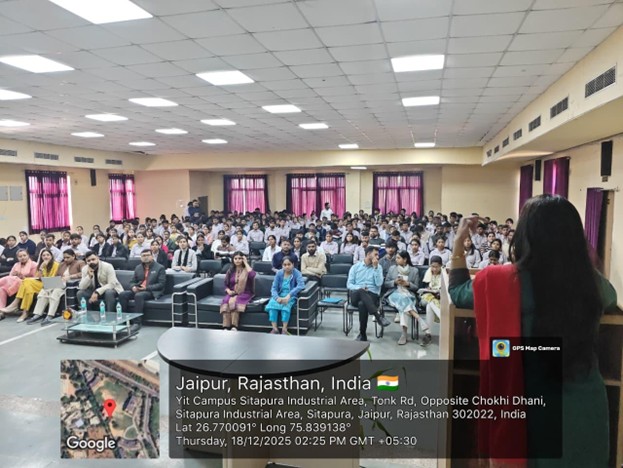
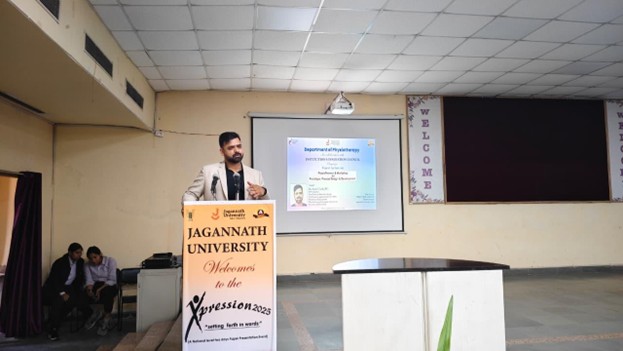
The Department of Physiotherapy, Jagannath University, Jaipur, in collaboration with the Institution’s Innovation Council (IIC), organized a Guest Lecture and Workshop on “PhysioPreneur & Prototype/Process Design & Development” on 18 December 2025 at the C Block Auditorium, Sitapura Campus. The program aimed to sensitize physiotherapy students to the evolving scope of the profession by integrating entrepreneurship, innovation, and practical problem-solving into clinical practice.
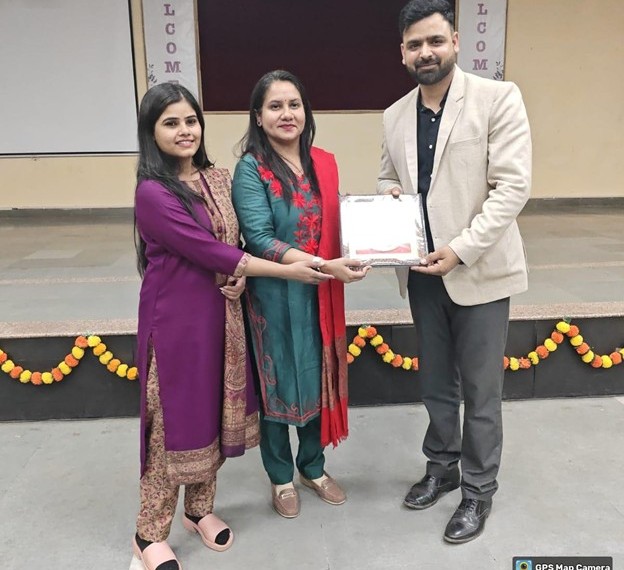
The session was conducted by Dr. Sunil Tank (PT), an accomplished physiotherapy professional and entrepreneur, who shared valuable insights drawn from his extensive experience in sports physiotherapy, manual therapy, clinical leadership, and start-up development. The expert emphasized the importance of identifying clinical gaps, transforming ideas into viable prototypes, and designing efficient processes that enhance patient care and service delivery. Through interactive discussions and real-life examples, students were introduced to concepts such as innovation-driven practice models, start-up mindset, product/process development, and sustainable physiotherapy services.
The workshop component enabled participants to understand the step-by-step approach to prototype development, including problem identification, ideation, validation, and implementation within a healthcare framework. Students actively engaged in discussions, asked relevant questions, and explored how innovation and entrepreneurship can coexist with ethical and evidence-based physiotherapy practice. Overall, the activity successfully fostered an environment of creative thinking, professional growth, and entrepreneurial awareness, aligning with the objectives of the Institution’s Innovation Council and contributing meaningfully to the holistic development of physiotherapy students.
Outcome
- Enhanced understanding of PhysioPreneurship and entrepreneurial opportunities in physiotherapy.
- Increased awareness about innovation, prototype development, and process design in healthcare practice.
- Improved critical thinking and problem-solving skills among students.
- Encouraged students to identify clinical gaps and develop innovative solutions.
- Motivated students to explore start-ups, private practice models, and self-employment.
- Strengthened knowledge of professional leadership and ethical entrepreneurial practices.
- Boosted confidence, creativity, and professional readiness of students.
- Promoted an innovation-oriented and research-driven mindset.
- Aligned student learning with industry requirements and current healthcare trends.
- Supported the objectives of the Institution’s Innovation Council (IIC) in fostering innovation and entrepreneurship.
Observations
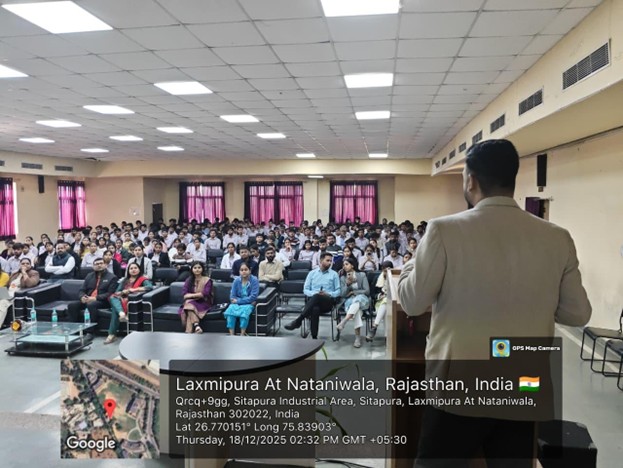
During the Guest Lecture and Workshop on “PhysioPreneur & Prototype/Process Design & Development”, students actively participated in discussions and demonstrated keen interest in the topic. A high level of engagement was observed throughout the session, with students asking relevant questions and sharing ideas related to innovation and entrepreneurship in physiotherapy. The interactive teaching approach of the resource person helped maintain attention and encouraged critical thinking. Faculty members observed increased motivation, confidence, and curiosity among students regarding non-traditional career pathways and innovative practices. Overall, the session created a positive learning environment and effectively stimulated interest in entrepreneurial and professional development activities.
Conclusion:
The Guest Lecture and Workshop on “PhysioPreneur & Prototype/Process Design & Development” was a successful and enriching academic activity. It effectively enhanced students’ understanding of entrepreneurship, innovation, and practical application in physiotherapy. The session motivated students to think creatively, explore new career opportunities, and adopt an innovation-driven approach to professional practice. Active participation and positive feedback reflected the relevance and impact of the program. Overall, the activity contributed significantly to the holistic development of students and aligned well with the objectives of the Institution’s Innovation Council and the university’s commitment to quality education and professional excellence.