
School of Physiotherapy
- Home
- Faculties
- Medical, Allied and Healthcare Sciences
- School of Physiotherapy
- Physiotherapy Awareness and Treatment Camp
Physiotherapy Awareness and Treatment Camp
Objectives
- To create awareness among police personnel regarding the importance of physical fitness, correct posture, and ergonomic practices in daily duty routines.
- To screen and identify common musculoskeletal problems such as neck pain, low back pain, shoulder pain, and joint stiffness prevalent among police staff.
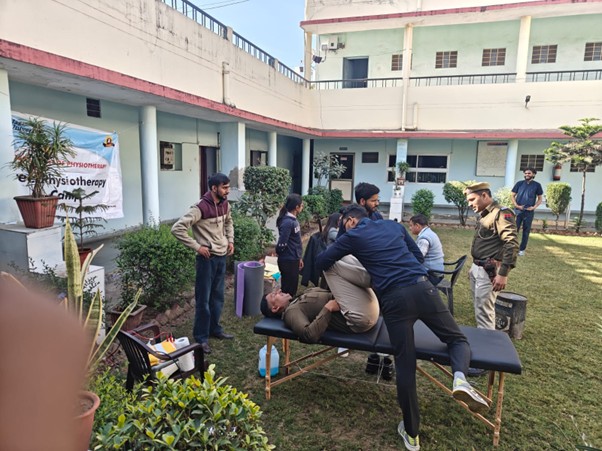
- To provide basic physiotherapy assessment, pain management advice, and therapeutic exercise demonstrations for prevention and management of work-related disorders.
- To offer hands-on clinical exposure to BPT students by engaging them in community-based physiotherapy services under expert supervision.
- To strengthen the university’s commitment towards community health promotion and preventive healthcare services.
- PO1. Recognize the role of Physiotherapy in the context of the health needs of the community and national priorities in the health sector.
- PO10. Engage in group activities that contribute to the betterment of society and behave ethically and responsibly in the social environment.
Summary
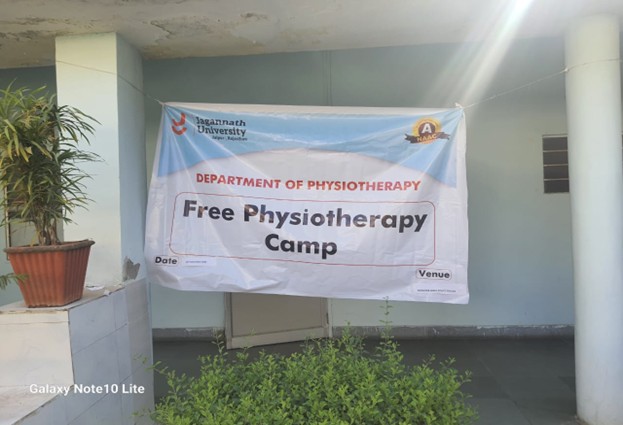
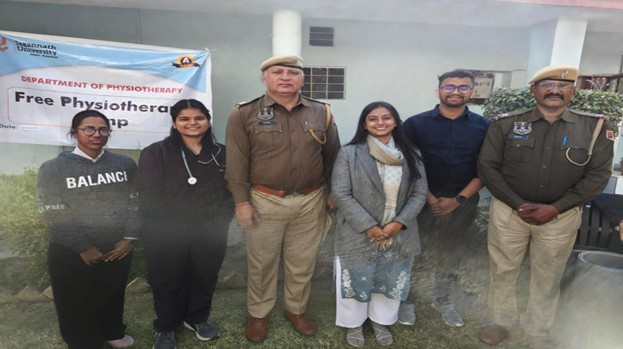
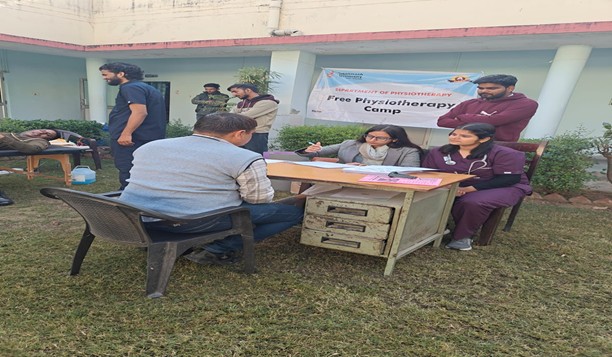
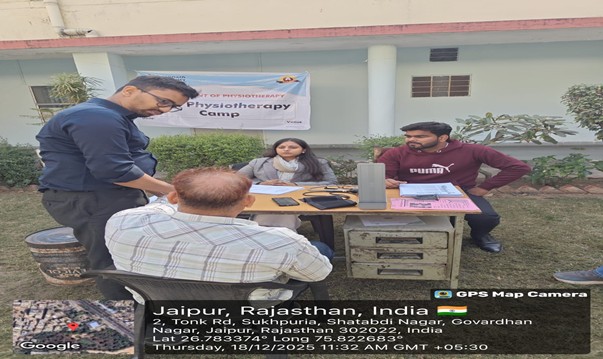
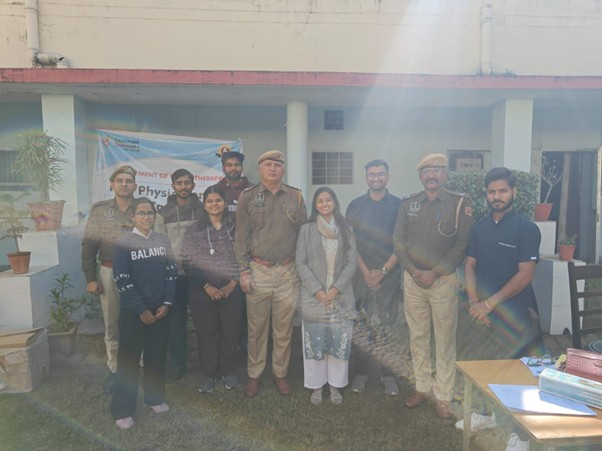
Jagannath University successfully organized a Physiotherapy Awareness and Treatment Camp at Police Station Sanganer Sadar, South Jaipur, with the aim of promoting physical health awareness and preventive physiotherapy care among police personnel. The camp was designed keeping in view the physically demanding nature of police duties, which often leads to postural deviations, musculoskeletal pain, and fatigue.
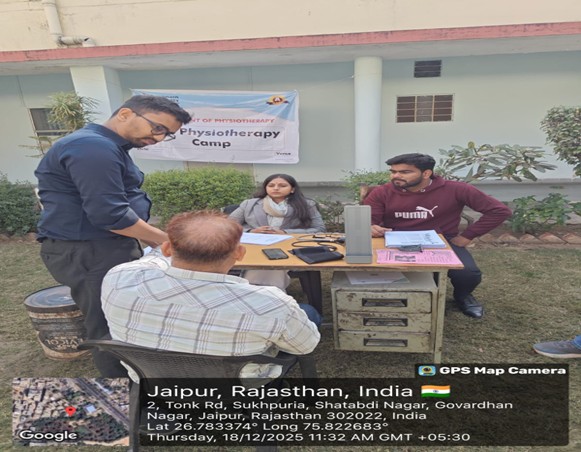
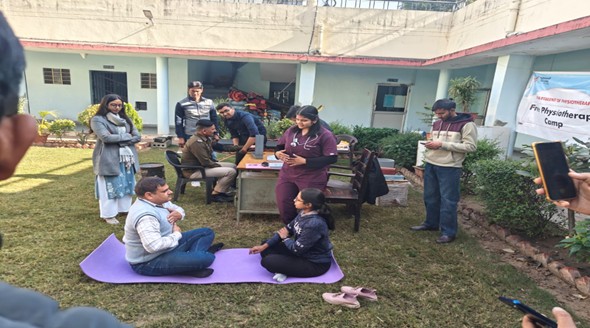
The camp witnessed enthusiastic participation from 4 BPT 3rd-year students and 2 BPT 4th-year students, who actively engaged in conducting basic physiotherapy assessments, postural evaluations, and screening for musculoskeletal complaints. The students also provided pain management guidance, educated participants on correct posture during standing, sitting, and duty hours, and demonstrated simple therapeutic exercises aimed at reducing pain and preventing future injuries.
The entire activity was effectively coordinated and supervised by Dr. Khushi Saini, Assistant Professor, BPT Department, and Mr. Shreyansh Tarun, Demonstrator, BPT Department. Their professional guidance ensured accurate assessment, safe exercise prescription, and meaningful interaction between students and beneficiaries. The coordinators also motivated the students to adopt a professional and empathetic approach while dealing with community members.
The camp served as a platform for experiential learning, allowing students to apply theoretical knowledge in real-life clinical situations. At the same time, police personnel benefited from individualized advice and practical solutions for managing work-related physical stress. Overall, the camp successfully fulfilled its dual purpose of community service and clinical skill development for students.
Outcome
- Police personnel gained awareness about posture correction, body mechanics, and prevention of musculoskeletal disorders.
- Early identification of common musculoskeletal issues such as back pain, neck pain, and shoulder discomfort was achieved.
- Participants learned simple home-based therapeutic exercises for pain relief and flexibility improvement.
- BPT students developed practical skills in patient assessment, communication, and exercise demonstration.
- The camp enhanced students’ confidence, clinical reasoning, and sense of social responsibility.
- Strengthened the bond between Jagannath University and the local community through healthcare outreach.
Observation
- A significant number of police personnel reported musculoskeletal pain due to prolonged standing, irregular duty hours, and poor posture.
- Many participants lacked awareness regarding ergonomics and preventive physiotherapy measures.
- There was keen interest among police staff in learning exercises and lifestyle modifications for pain management.
- Students showed active involvement, discipline, and professionalism while interacting with participants.
- Community-based physiotherapy camps proved effective in delivering preventive healthcare at the grassroots level.
Conclusion:
The Physiotherapy Awareness and Treatment Camp at Police Station Sanganer Sadar was a successful initiative that highlighted the importance of preventive physiotherapy in occupational health. The camp not only benefited police personnel by addressing their physical health concerns but also provided invaluable clinical exposure to BPT students. Under expert supervision, students were able to translate classroom learning into practical application. Such community outreach programs reinforce Jagannath University’s dedication to s, and should be continued regularly to promote a healthier society.