
School of Physiotherapy
- Home
- Faculties
- Medical, Allied and Healthcare Sciences
- School of Physiotherapy
- Physiotherapy PhysioPrenure
Guest Lecture "Physiopreneur-III"
Objectives
- To create awareness among physiotherapy students about entrepreneurship opportunities in the field of physiotherapy.
- To motivate students to develop an entrepreneurial mindset and explore self-employment beyond conventional clinical roles.
- To provide practical insights into establishing and managing physiotherapy clinics through expert interaction.
- To bridge the gap between academic learning and real-world professional practice.
- To encourage innovation, leadership, and professional growth among future physiotherapists.
- PO1. Recognize the role of Physiotherapy in the context of the health needs of the community and national priorities in the health sector.
- PO5. Identify, define, and deal with problems of professional practice through logical, analytical, and critical thinking.
- PO8. Communicate effectively across a wide range of professional and personal contexts.
- PO10. Engage in group activities that contribute to the betterment of society and behave ethically and responsibly in the social environment.
Summary
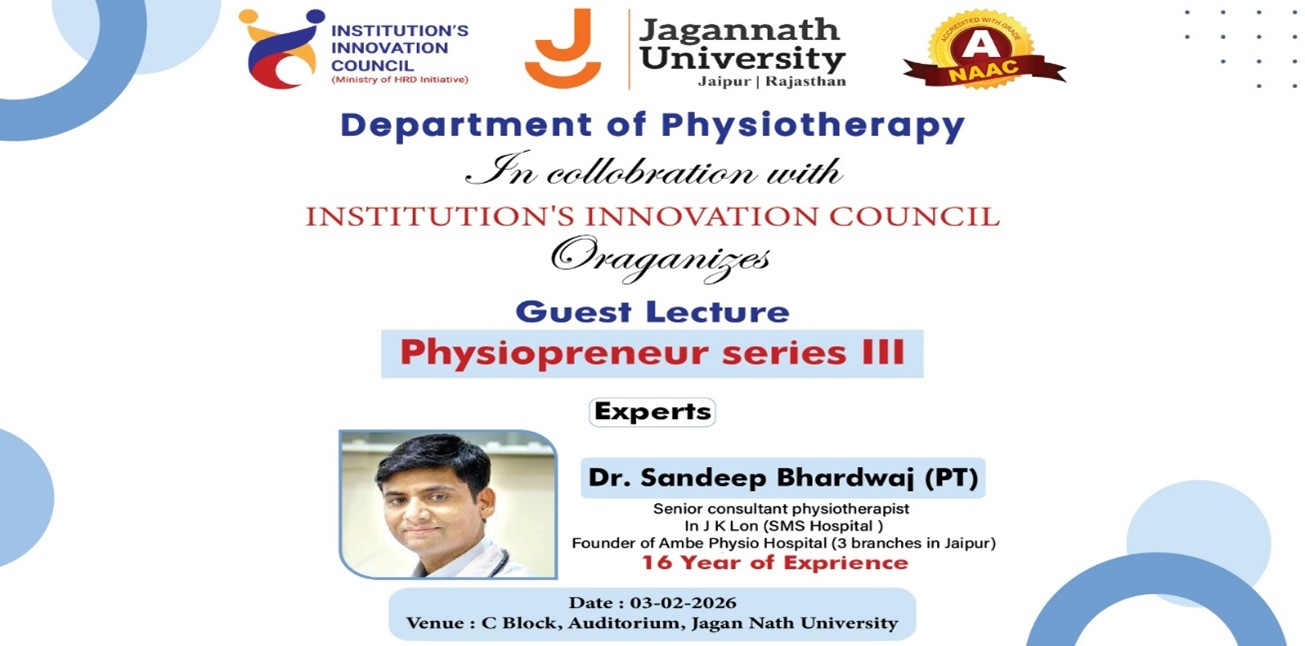
The Department of Physiotherapy, Jagannath University, Jaipur, in collaboration with the Institution’s Innovation Council (IIC), successfully organized a Guest Lecture under the Physiopreneur Series III with the objective of fostering entrepreneurial awareness and professional development among physiotherapy students. The program was designed to expose students to emerging career opportunities, encourage innovation, and promote self-employment in the field of physiotherapy in alignment with national healthcare priorities.
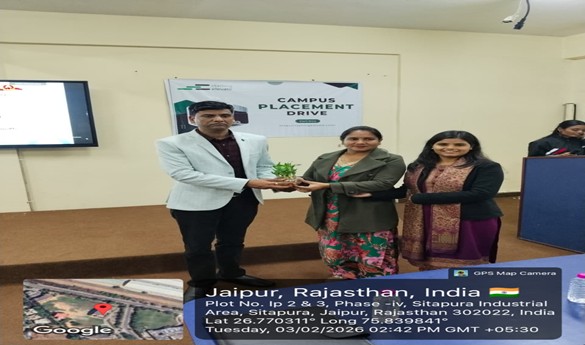
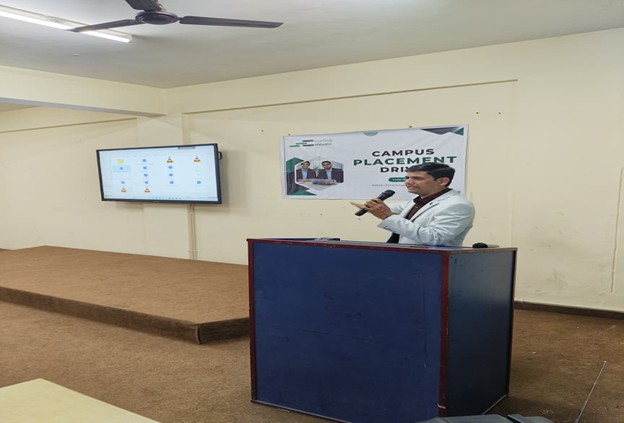
The resource person for the session was Dr. Sandeep Bhardwaj (PT), a highly experienced senior consultant physiotherapist currently practicing at J.K. Lon (SMS Hospital), Jaipur. Dr. Bhardwaj is the Founder of Ambe Physio Hospital, which operates multiple branches across Jaipur, and has more than 16 years of clinical and professional experience in the field of physiotherapy. His extensive expertise in clinical practice, hospital administration, and entrepreneurship made him an ideal speaker for this session.
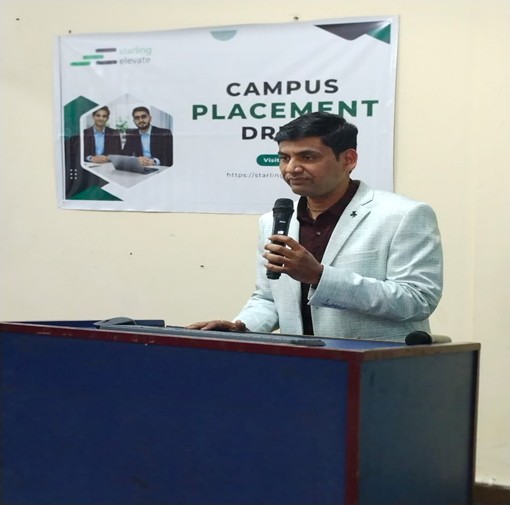
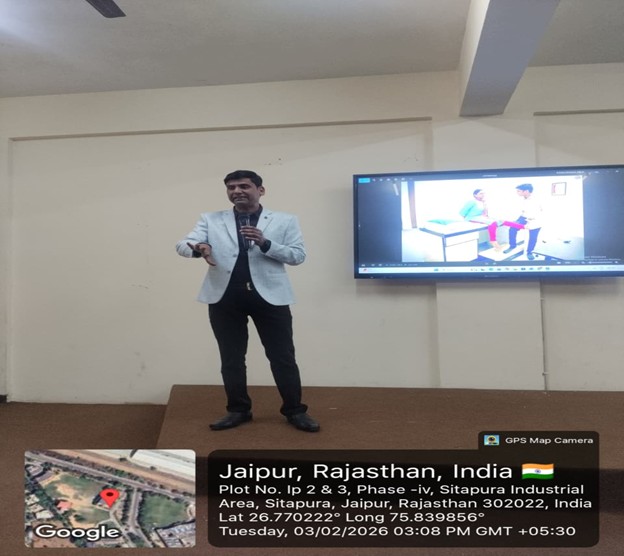
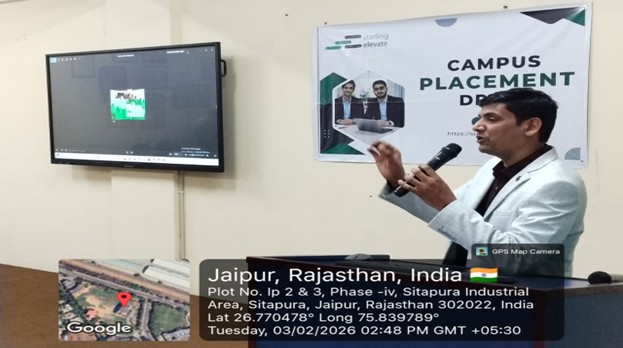
During the lecture, Dr. Bhardwaj shared his professional journey, highlighting the transition from clinical practice to successful physiotherapy entrepreneurship. He discussed the practical aspects of establishing and managing physiotherapy clinics, including infrastructure planning, team management, patient-centered care, ethical practice, financial sustainability, and branding in healthcare services. Emphasis was placed on maintaining professional ethics, quality standards, and evidence-based practice while expanding physiotherapy services to meet community health needs.
The speaker also addressed common challenges faced by young physiotherapists, such as competition, resource limitations, and lack of business knowledge, and provided practical strategies to overcome these barriers through critical thinking, continuous learning, and innovation. He encouraged students to develop leadership qualities, effective communication skills, and a problem-solving approach to succeed in professional practice. Real-life case examples from his clinical and entrepreneurial experience enriched the session and helped students relate theoretical knowledge to real-world applications.
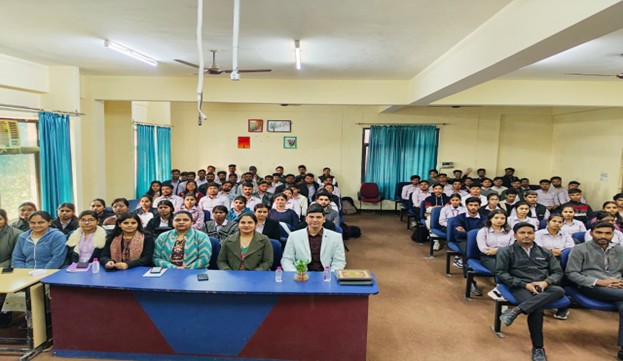
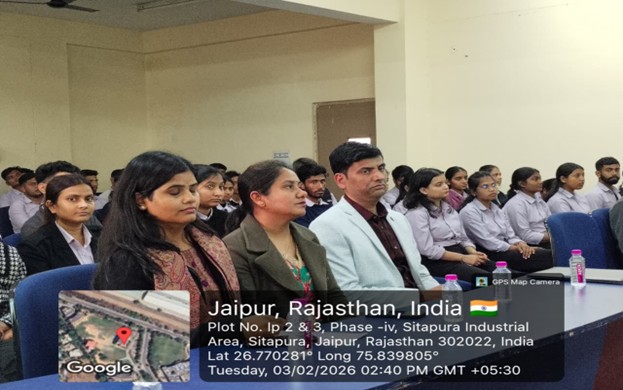
The interactive nature of the session allowed students to actively engage with the expert through questions and discussions, clarifying doubts related to career planning, specialization, and entrepreneurship in physiotherapy. The lecture motivated students to explore diverse career pathways beyond conventional employment, emphasizing the role of physiotherapists as healthcare leaders and contributors to community well-being.
Overall, the Physiopreneur Series III Guest Lecture was a highly informative and inspiring activity that strengthened the professional outlook of physiotherapy students. The program successfully bridged the gap between academic learning and professional practice, encouraged innovation and self-reliance, and reinforced the importance of ethical and socially responsible entrepreneurship in physiotherapy.
Outcome
- Students developed a comprehensive understanding of physiotherapy entrepreneurship and the scope of self-employment in the profession.
- Enhanced awareness of the practical aspects of setting up and managing physiotherapy clinics, including infrastructure, staffing, and service delivery.
- Improved knowledge of ethical and professional responsibilities required in independent physiotherapy practice.
- Students gained insight into real-world challenges faced by physiotherapists and learned strategies to overcome them through innovation and critical thinking.
- Strengthened communication and interpersonal skills, essential for patient care, teamwork, and professional networking.
- Encouraged development of leadership qualities and decision-making abilities among students.
- Students were motivated to explore diverse career pathways, including private practice, hospital-based services, and community-oriented physiotherapy.
- Enhanced ability to apply theoretical knowledge to practical clinical and entrepreneurial scenarios.
- Fostered an entrepreneurial mindset, promoting creativity, self-confidence, and professional independence.
- Reinforced the importance of social responsibility and community engagement in delivering accessible and quality physiotherapy services.
Observations
- Students provided positive feedback, appreciating the practical and experience-based insights shared during the session.
- The guest lecture was found to be highly informative and motivating, especially for students interested in entrepreneurship and private practice.
- Participants actively engaged in interactive discussions and question–answer sessions, reflecting keen interest and curiosity.
- Students expressed improved clarity regarding career planning and professional growth in physiotherapy.
- The real-life examples shared by the resource person enhanced conceptual understanding and practical relevance.
- Faculty members observed a noticeable increase in enthusiasm, confidence, and professional awareness among students.
- The session effectively bridged the gap between academic learning and real-world practice.
- Overall, the activity was observed to be well-organized, impactful, and aligned with program outcomes, contributing positively to student learning and professional orientation.
Conclusion:
The Physiopreneur Series III Guest Lecture organized by the Department of Physiotherapy in collaboration with the Institution’s Innovation Council (IIC) was a purposeful and impactful academic activity aimed at enhancing the professional and entrepreneurial awareness of physiotherapy students. The program effectively emphasized the importance of innovation, self-employment, and ethical practice in the modern healthcare environment.
The session, delivered by Dr. Sandeep Bhardwaj (PT), provided valuable insights drawn from his extensive clinical experience and successful entrepreneurial journey. His interaction helped students understand the realities of professional practice, including clinic establishment, patient-centered care, professional ethics, and sustainable growth. The practical examples shared during the lecture enabled students to connect theoretical knowledge with real-world applications, thereby strengthening their professional understanding.
The activity successfully bridged the gap between academic learning and professional practice. It motivated students to explore diverse career pathways beyond conventional roles and encouraged the development of critical thinking, leadership, and communication skills essential for independent practice. The interactive discussions further enhanced student engagement and clarified career-related queries.
Overall, the guest lecture contributed significantly to students’ professional development by fostering an entrepreneurial mindset, reinforcing ethical values, and highlighting the role of physiotherapists in addressing community health needs. The program aligned well with institutional objectives and program outcomes, making it a valuable addition to the academic curriculum and a meaningful step toward preparing competent and future-ready physiotherapy professionals.