School of Physiotherapy
- Home
- Faculties
- Medical, Allied and Healthcare Sciences
- School of Physiotherapy
- Blood Donation Camp
Blood Donation Camp
Objectives
The Expert Talk was organized with the following objectives:
- To promote awareness about the importance of voluntary blood donation.
- To encourage students, faculty, and community members to participate in a noble social cause.
- To collaborate with healthcare organizations for organizing health-related activities on campus.
- To instill a spirit of service and social responsibility among students.
- PO1. Recognize the role of Physiotherapy in the context of the health needs of the community and national priorities in the health sector.
- PO10. Engage in group activities that contribute to the betterment of society and behave ethically and responsibly in the social environment.
Summary
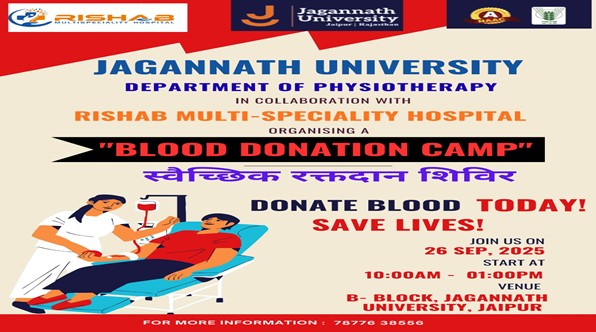
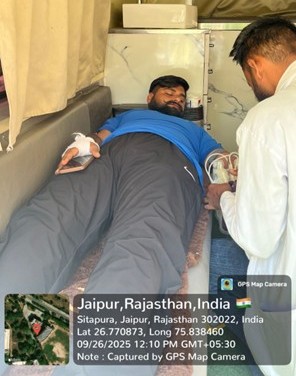
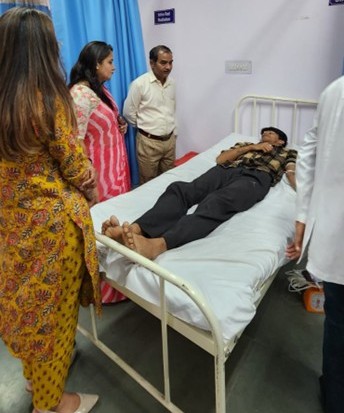
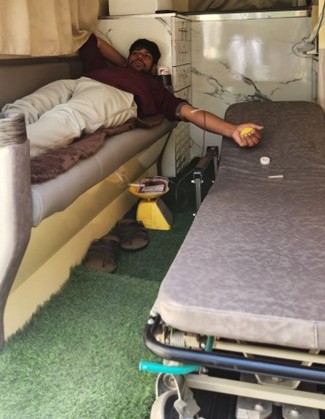
The Department of Physiotherapy at Jagannath University, Jaipur, in collaboration with Rishab Multi-Speciality Hospital and Vande Blood Center, successfully organized a Blood Donation Camp on the university campus. The event aimed at promoting the significance of voluntary blood donation and inspiring students, faculty, and other members of the university community to contribute towards saving lives.
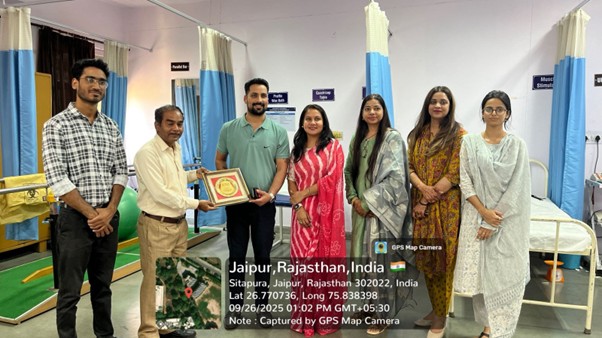
The camp witnessed enthusiastic participation, with around 30–35 individuals stepping forward to donate blood. Out of these, approximately 32–33 units of blood were successfully collected. The smooth organization and efficient medical supervision of the camp were ensured by the dedicated presence of Dr. Vishvesh Dave, HoD, Physiotherapy, Rishab Hospital, along with his team, who provided full support throughout the event.
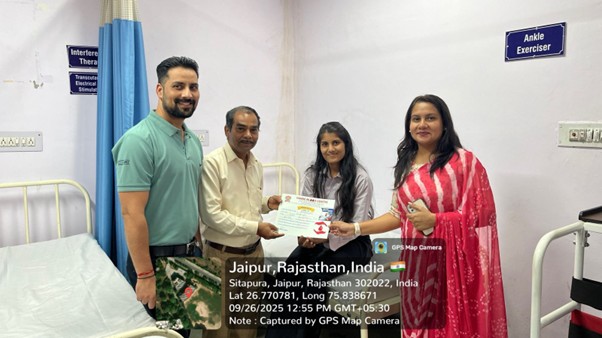
To recognize the efforts of the donors, each participant was awarded a certificate of appreciation and a donor card. This gesture not only acknowledged their contribution but also encouraged a culture of regular and voluntary blood donation.
Beyond the immediate impact of collecting blood units, the camp played a crucial role in creating awareness about the importance, safety, and necessity of blood donation. It highlighted the humanitarian value of such initiatives, while also instilling in students and faculty a sense of social responsibility, compassion, and service to the community.
Outcome
- 32–33 units of blood were successfully collected.
- Students and faculty developed a sense of responsibility towards community service.
- Enhanced collaboration between the university and healthcare organizations.
- Increased awareness of the life-saving impact of blood donation.
Observation
- The camp received active participation from students, faculty, and staff members, showing enthusiasm and social responsibility.
- Medical support and guidance were efficiently provided by Dr. Vishvesh Dave and his team from Rishab Multi-Speciality Hospital.
- The process of registration, donation, and post-donation care was carried out smoothly and systematically.
- Donors were highly motivated, and the appreciation through certificates and donor cards encouraged positive reinforcement.
- The event created a healthy awareness environment about the importance and safety of voluntary blood donation among the university community.
Conclusion:
The Blood Donation Camp at Jagannath University was a resounding success, reflecting the true spirit of service and compassion. It not only contributed to saving lives but also strengthened awareness about voluntary blood donation among the university community. Such initiatives serve as a reminder of the vital role educational institutions play in promoting health and social welfare.