Conferences
ICRTSET-2026 (Day-02)
The second day of the 2nd International Conference on Recent Trends in Science, Engineering, and Technology (ICRTSET-26) was held on 31 January 2026 at Jagan Nath University, Jaipur. The day focused on expert deliberations and technical discussions aimed at up-skilling knowledge and promoting research advancements in emerging areas such as 6G Communication, Electrical Power Quality, Cloud Computing, Artificial Intelligence & Data Analytics, Remote Sensing, and Earth Sciences.
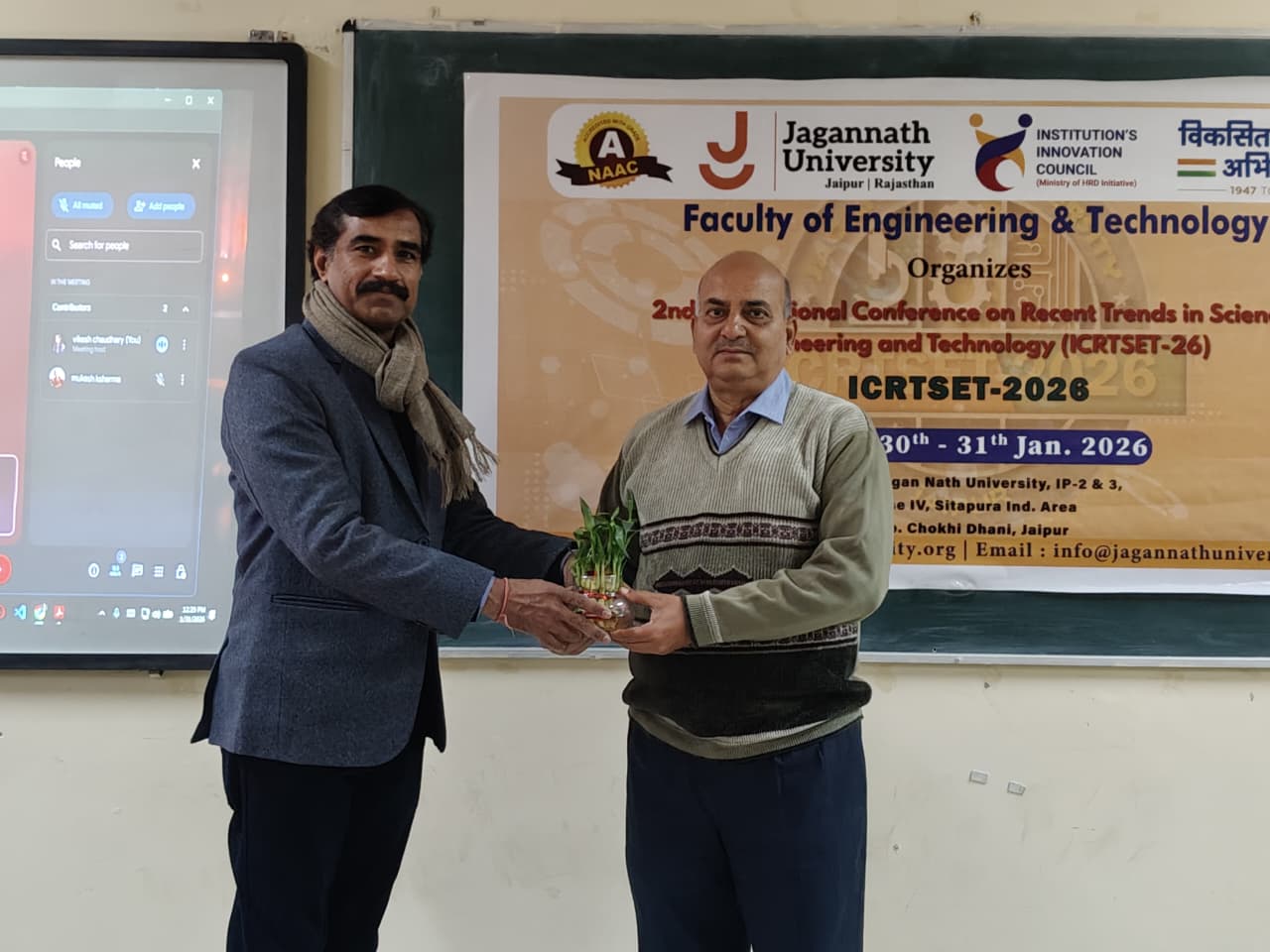
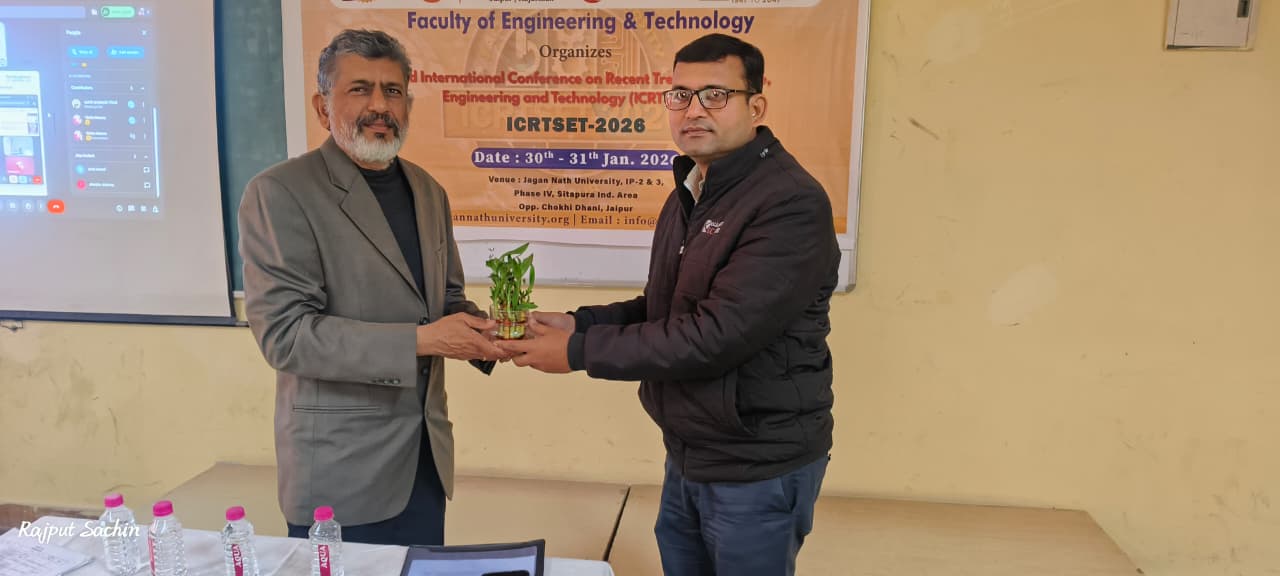
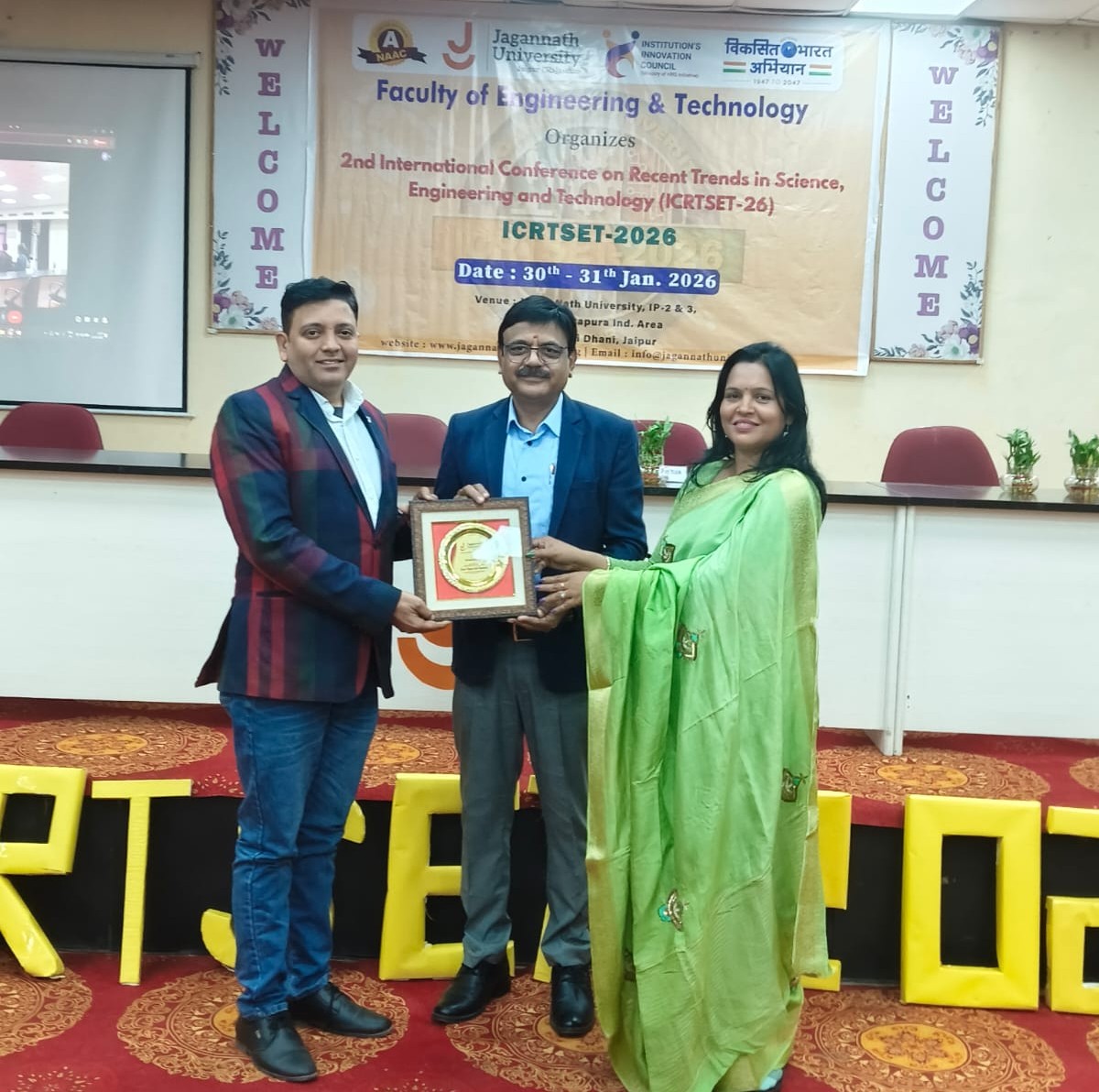
Day-2 commenced with opening remarks and a formal welcome of the Guests of Honour; Dr. Vishwambhar Pathak, Professor, Department of CSE, BITS Mesra (Off Campus Jaipur); Dr. Sudhir Sharma, Joint Director, School of Engineering & Technology, Professor & HOD (ECE & Biomedical Engineering), JNU, Jaipur;
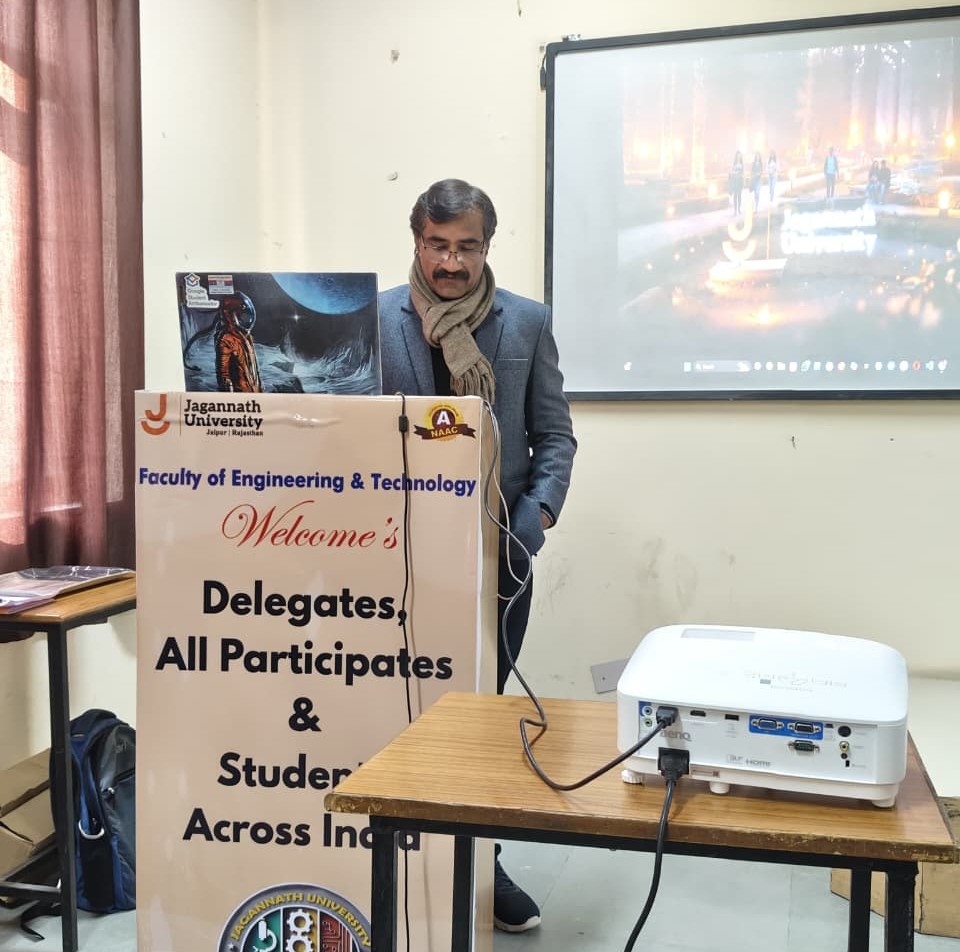
The technical proceedings began with an expert talk by Dr. Vishwambhar Pathak on “Scalable yet Lightweight Learning Models: From Classical to Hybrid Classical-Quantum Interventions.” Using mathematical formulations and graphical illustrations, he explained hybrid classical–quantum workflows for computing similarity in high-dimensional structured spaces. He highlighted that hybrid learning models provide a practical and sustainable pathway for scalable, structure-aware artificial intelligence.
The second expert session was delivered by Dr. Sudhir Sharma, who emphasized the importance of continuous up-skilling in Electrical and Electronics Engineering. He encouraged researchers and students to identify research gaps and explore innovative ideas that contribute to sustainable technological growth
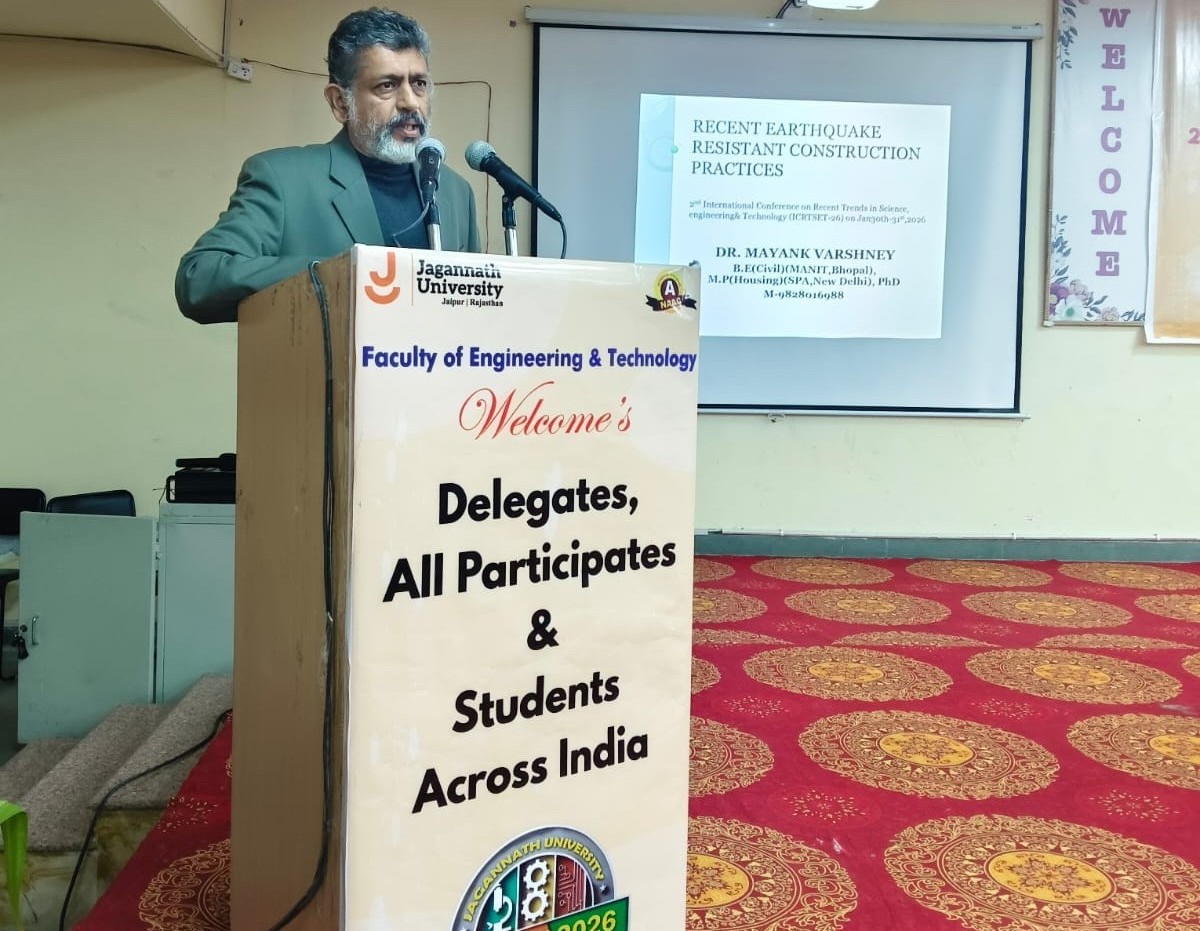
The third expert talk was delivered by Dr. Mayank Varshney, who discussed seismic effects and earthquake occurrence mechanisms. He highlighted the role of AI-based prediction techniques for enhancing disaster preparedness and public safety. He also explained various earthquake-resistant construction practices, including flexible structural designs, advanced materials, and shock-absorbing systems.
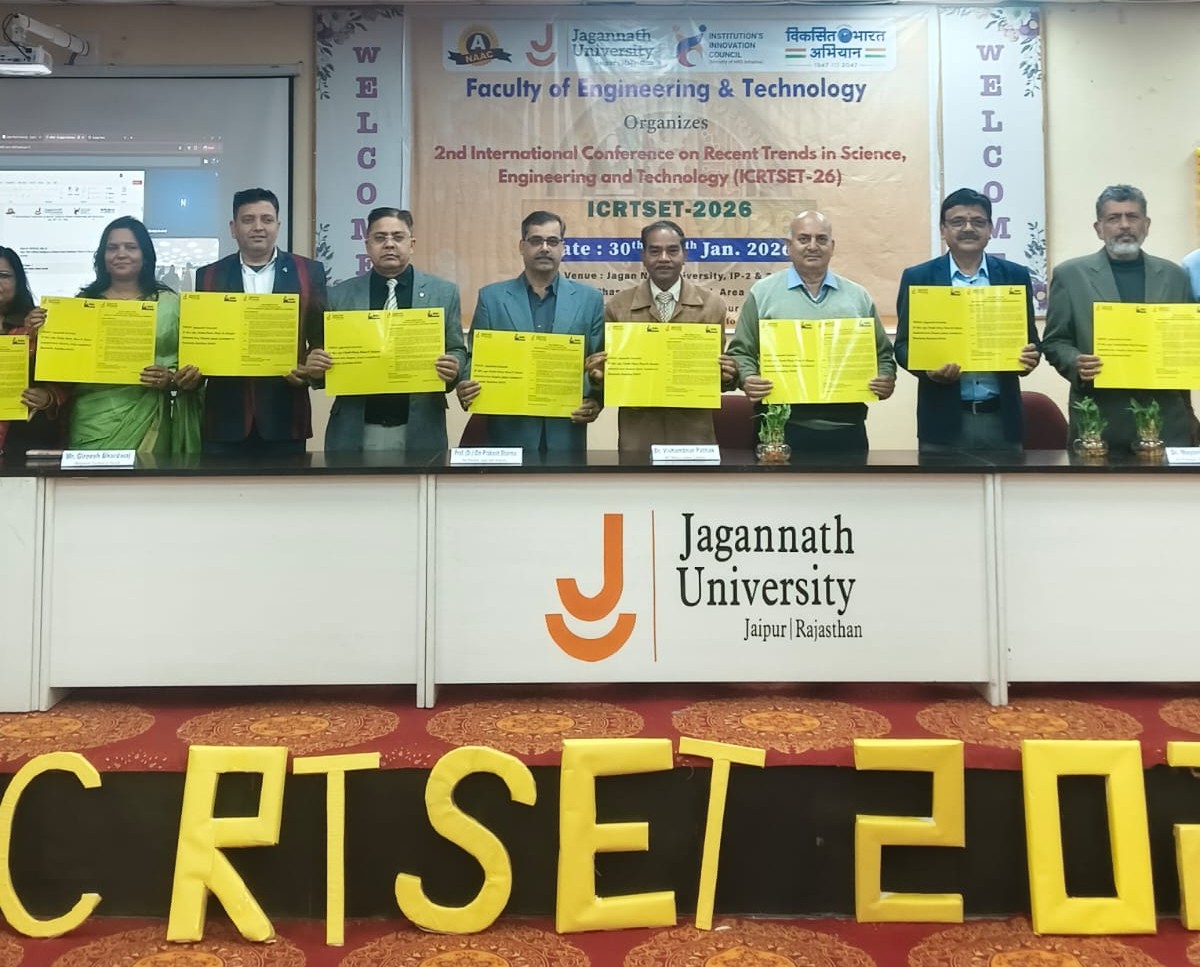
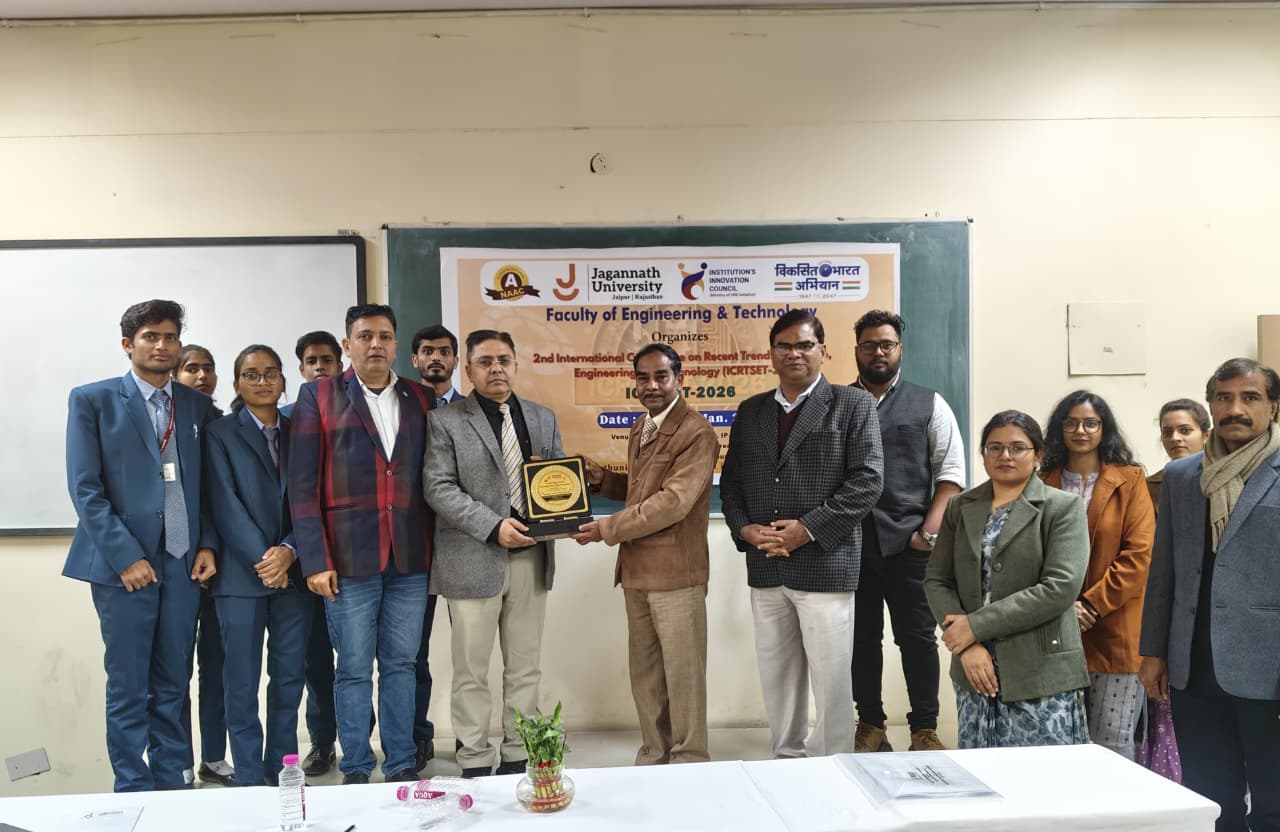
Following the expert sessions, a value-added skill course for B.Tech and Diploma students of Civil and Mechanical Engineering was formally launched in collaboration with UltraTech Cement Limited. The event was graced by Mr. Gireesh Bhardwaj, Regional Technical Head, UltraTech Cement Limited. In his address, he emphasized that the course would provide hands-on industry exposure, practical technical knowledge, and enhanced job readiness, thereby strengthening industry–academia collaboration and improving student employability.
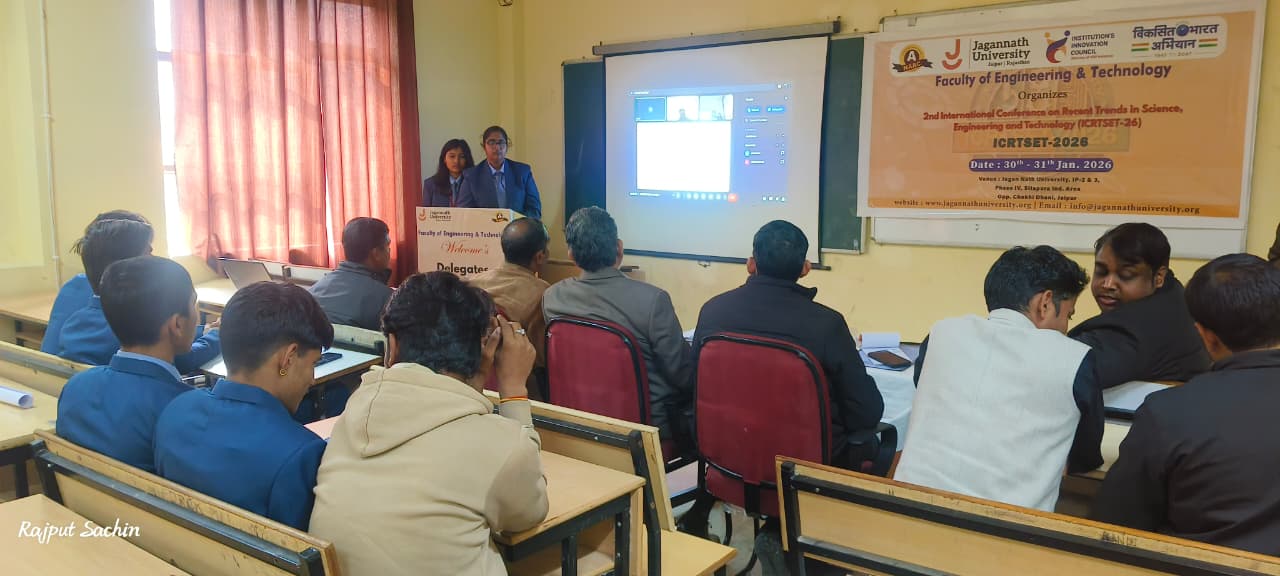
After the course launch, four parallel technical paper presentation sessions were conducted under different tracks.
Track 1: Networking and Communication was chaired by Dr. Sudhir Sharma, with Dr. Ramesh Barati and Mr. Raghu Nandan Hada as reporters. A total of eight papers (4 online and 4 offline) were presented, highlighting the growing importance of networking and communication technologies in societal applications.
Track 2: Cloud Computing was chaired by Dr. Vishwambhar Pathak, with Dr. Renu Bagoria and Dr. Ruchi Dave as reporters. Out of 36 papers (24 online and 12 offline), the session showcased emerging research in AI, Cloud Computing, Quantum Computing, and Next-Generation Intelligent Systems.
Track 3: Sustainable Engineering was chaired by Dr. Mayank Varshney, with Dr. Amit Saraf and Mr. Rakesh Chand Sharma as reporters. A total of 10 papers (5 online and 5 offline) were presented, emphasizing renewable energy sources and sustainable engineering solutions.
Track 4: Science was chaired by Prof. A. K. Dwivedi, PVC and CoE, with Dr. Anil Kumar Sharma and Dr. Vikesh Choudhary as reporters. Out of 13 papers (6 online and 7 offline), the presentations were successfully conducted.
The valedictory function was held after lunch. Dr. Om Prakash Sharma, Pro-President and Program Chair, ICRTSET-26, presented the closing report, highlighting that 67 papers were presented in hybrid mode across four technical tracks over two days. He emphasized that the conference served as a vibrant platform for knowledge exchange, networking, and collaboration, covering emerging domains such as Nanotechnology, IoT, Industry 4.0, and Next-Generation Technologies.
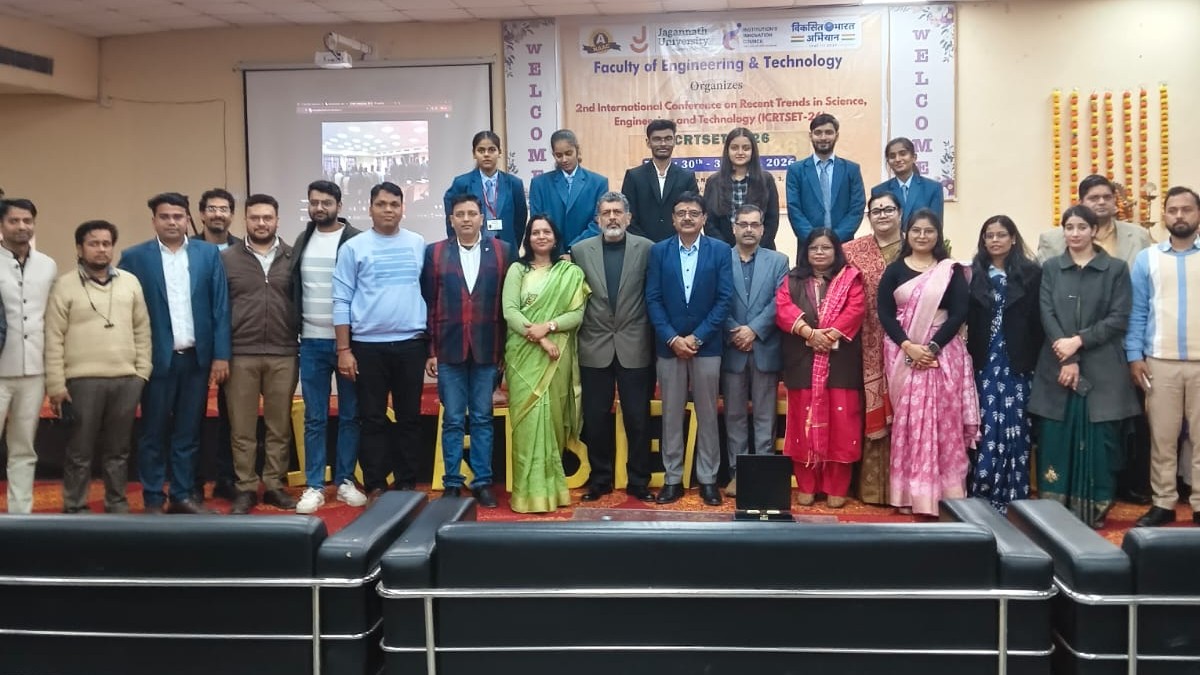
Participants and external paper presenters shared positive feedback and valuable suggestions, which were warmly acknowledged by the senior members of the organizing committee. The appreciation from participants reflected the success and impact of the conference.
In his closing remarks, Sh. Tanmay Pattnayak, Registrar, motivated the students and researchers to pursue quality research aligned with national development goals and contribute towards “Viksit Bharat 2047”.
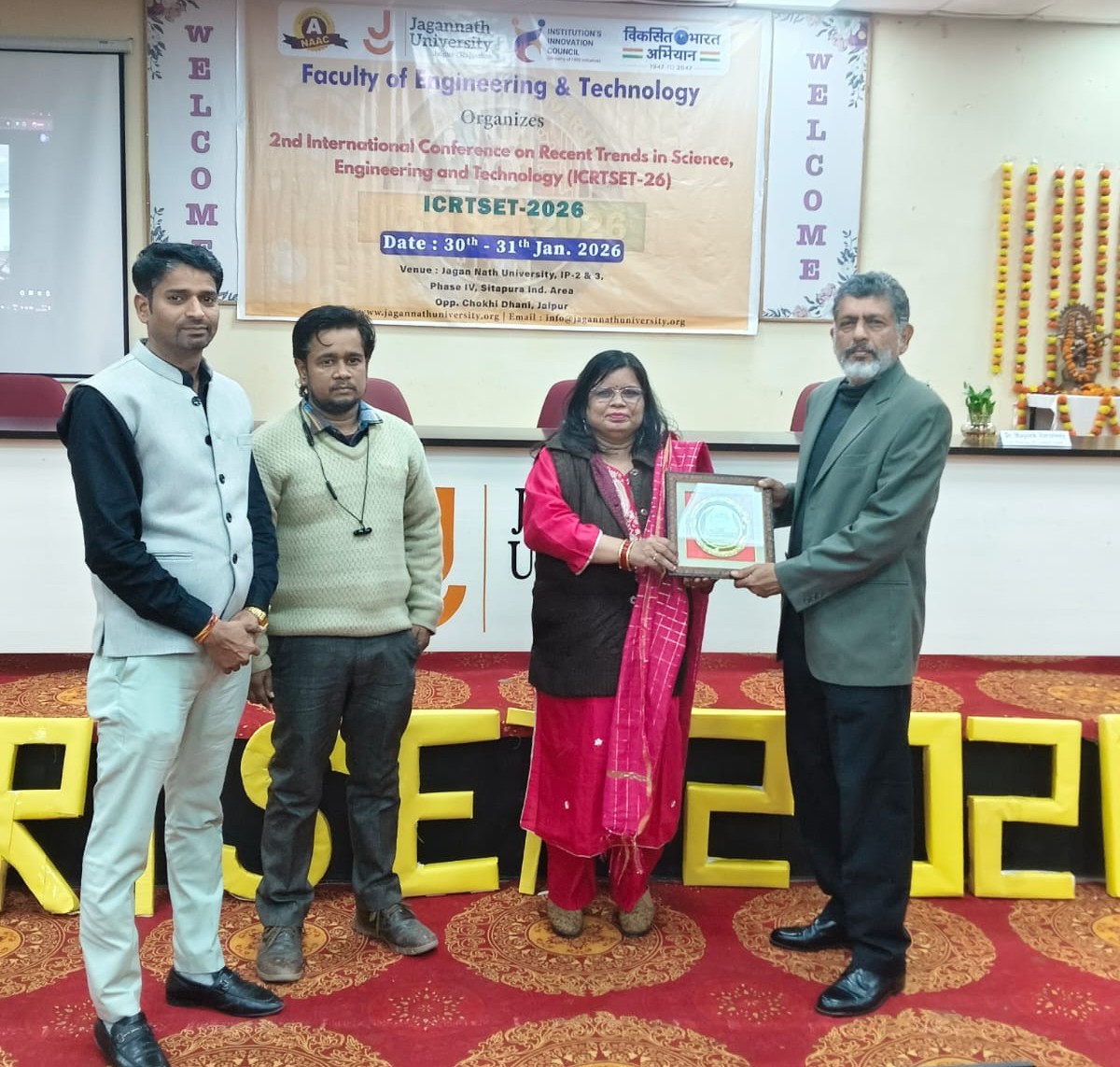
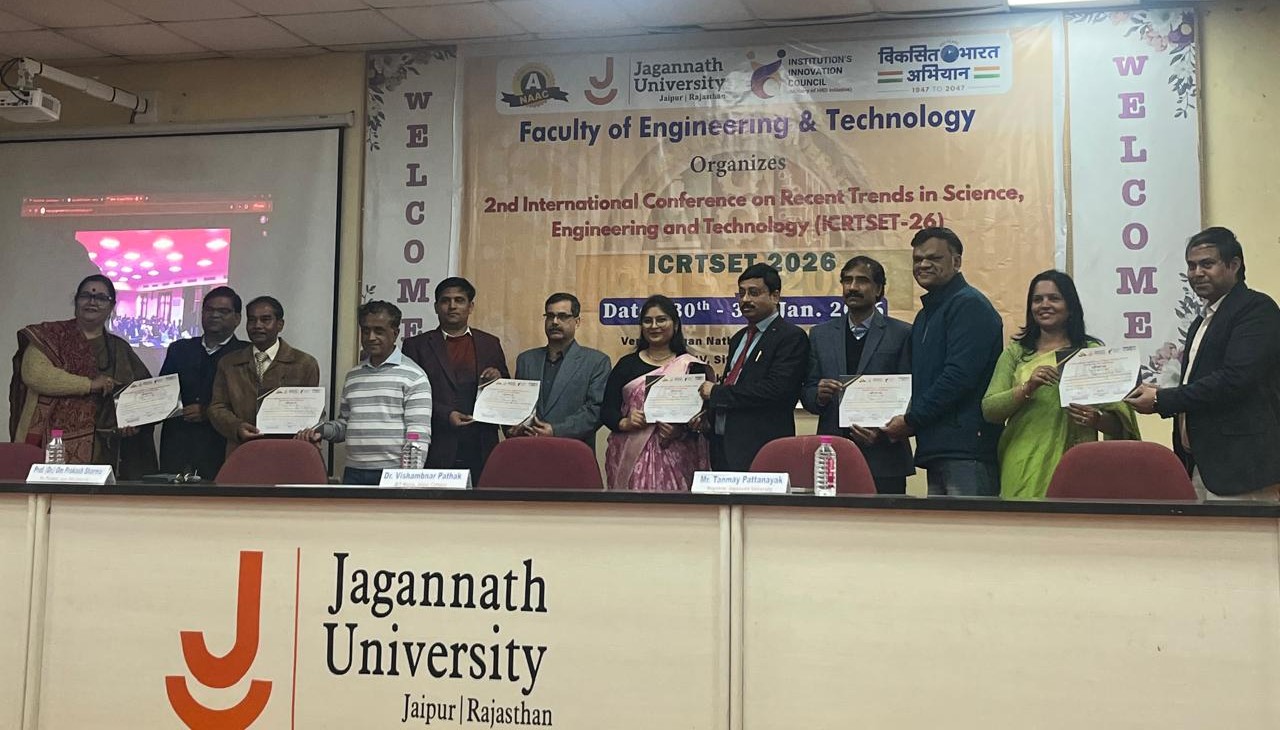
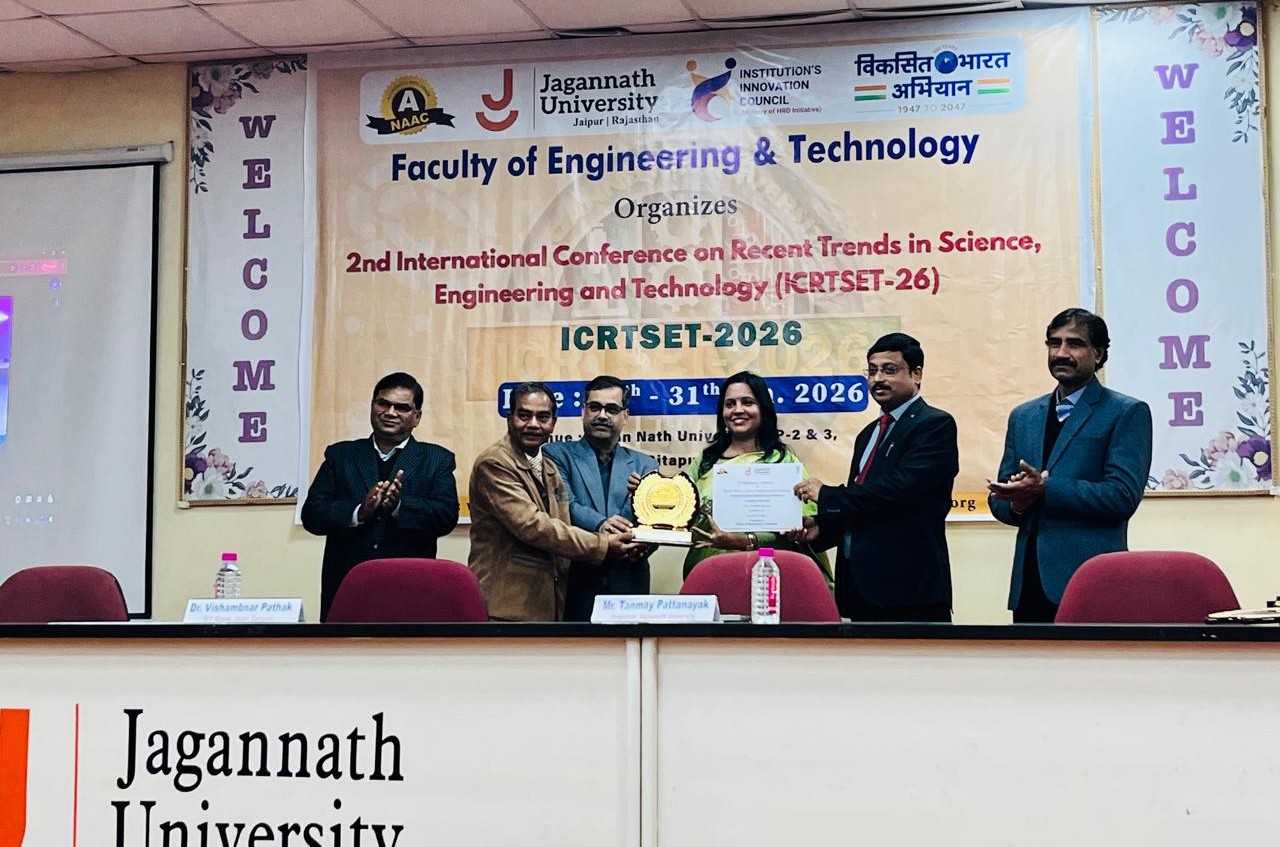
Certificates were distributed to paper presenters and student volunteers by Dr. Om Prakash Sharma, Sh. Tanmay Pattnayak, Dr. Vivek Sharma (Convener, ICRTSET-26), and the Track Chairs Dr. Anil Kumar Sharma, Dr. Ramesh Barati, Dr. Renu Bagoria, and Dr. Amit Saraf. The valedictory session was smoothly coordinated by Dr. Jaya Sinsinwar, Ms. Apoorva Khandelwal, and student volunteers. The vote of thanks was delivered by Dr. Ramesh Barati, and the conference concluded with the National Anthem.