
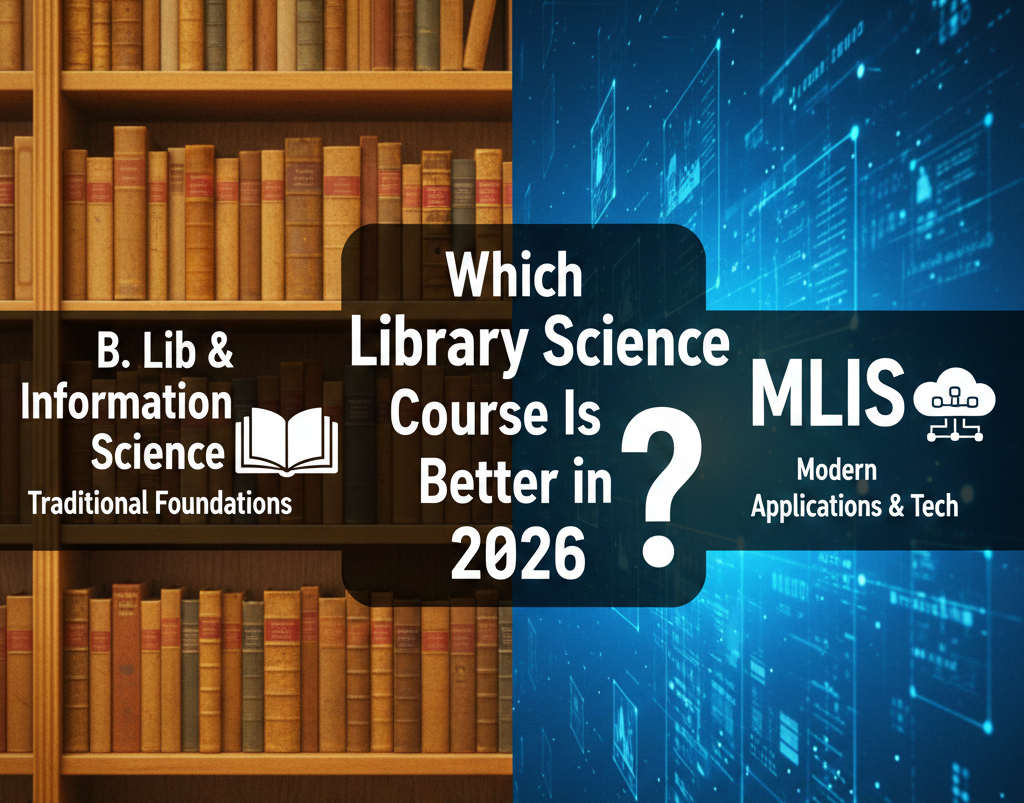
Library science and information management's profile has changed considerably over time. With digital libraries, information management and knowledge-based industries set to increase, the students are always in a state of dilemma as to which course they must opt for- B. Lib & Information Science (Bachelor of Library and Information Science) or MLIS (Master of Library and Information Science).
In 2026, making the right decision between these two can affect your career scope, salary and long-term growth. This blog will be diving into a comprehensive comparison of B.Lib vs MLIS in terms of differences, benefits, career prospects and which course is better for you.
Understanding B. Lib & Information Science
B. Lib & Information Science is an undergraduate course in the field of library and management information. The network’s programs generally last 3 to 4 years and address the following:
- Cataloguing and classification
- Archiving and preservation
- Digital library management
- Information retrieval systems
- Research methodology
B.Lib is a course for those who are interested in library science but cannot afford to study it. It includes basic concepts of physical and digital information management.
Understanding MLIS (Master of Library and Information Science)
An MLIS is the master's degree program for library and information studies. MLIS Most MLIS programs generally last 1–2 years and cover:
- Advanced cataloguing and metadata management
- Digital and electronic libraries
- Knowledge management in corporations
- Research and academic librarianship
- Information system design and analytics
MLIS is a great fit for students looking to focus their skills and pursue middle- and upper-level positions in the library and information world.
B.Lib vs MLIS: Key Differences
Aspect |
B.Lib & Information Science |
MLIS |
|---|---|---|
| Level | Undergraduate | Postgraduate |
| Duration | 3–4 years | 1–2 years |
| Entry Requirement | 10+2 / higher secondary | Bachelor’s degree (preferably B.Lib) |
| Focus | Foundational knowledge of library science | Advanced and specialized knowledge |
| Career Roles | Librarian, Assistant Librarian, School/College Library Staff | Senior Librarian, Digital Library Manager, Knowledge Manager, Archivist |
| Salary Potential | Moderate starting pay | Higher pay due to advanced skills and specialization |
| Scope | Basic library management and digital tools | Advanced library systems, corporate knowledge management, and research-oriented roles |
Career Opportunities After B. Lib & Information Science
B. Lib graduates have multiple career paths in 2026, especially with the growing demand for information management professionals:
- School and College Librarian – Managing libraries and supporting curriculum.
- Library Assistant – Assisting in cataloguing, archiving, and library operations.
- Digital Library Executive – Managing e-resources and online repositories.
- Cataloguer and Indexer – Organizing and classifying books, journals, and digital content.
- Research Assistant – Assisting in data collection and literature organization.
While B.Lib is an entry-level course, it allows students to enter the profession early, gain experience, and later pursue MLIS for specialization.
Career Opportunities After MLIS
MLIS gives you approach to higher positions and specialized jobs which are usually not open for B.Lib alone:
- Senior Librarian – Running library of universities and corporate houses.
Digital Library Manager – Responsible for managing large digital repositories and e-resources.- Knowledge Management Specialist – Managing business or research information systems.
- Archivist – Archiving historical and digital documents.
- Academic and Research Librarian – Fostering complex research in schools, colleges, and universities.
MLIS graduates are also needed in the corporate, academic, government or research fields which is why it is the number one college degree for future career prospects.
Scope Comparison: B. Lib vs MLIS in 2026
B.Lib Scope:
- Starting jobs in schools, colleges, and public libraries
- Personnel in digital library and content management support positions
- Base for further studies (MLIS or PhD)
MLIS Scope:
- Upper and top management positions in academic, corporate, and government libraries
- Key concepts such as knowledge management and digital content management within organizations
- Research-oriented and consultancy roles
- Opportunities for freelancing in digital archives and information management
MLIS in 2026 has more of a corporate, technological øyvind aurlien hoyland communications feel to the most popular teen dating sites it and (presumably) corporate life is reflected also as differences between new admin istra tive structures.
Salary Comparison: B.Lib vs MLIS
Career Path |
Average Salary (INR/month) |
Notes |
|---|---|---|
| School/College Librarian (B.Lib) | 20,000 – 35,000 | Entry-level private/public institutions |
| Library Assistant (B.Lib) | 15,000 – 25,000 | Lower pay scale for support roles |
| Digital Library Executive (B.Lib) | 25,000 – 40,000 | Depends on organization |
| Senior Librarian (MLIS) | 40,000 – 70,000 | Universities and corporate libraries |
| Knowledge Manager (MLIS) | 50,000 – 1,00,000 | Corporate and research institutions |
| Archivist / Research Librarian (MLIS) | 35,000 – 80,000 | Specialized roles in archives and research |
Observation: MLIS graduates earn more due to advanced knowledge, leadership potential, and specialized skills.
Advantages of Pursuing B.Lib
- Early Entry: A program that allows students to enter and work in the field of library science right after high school.
- Everything You Wanted to Know About Managing a Library: Essential skills for managing traditional and electronic libraries.
- Affordable: It is comparatively inexpensive compared to postgraduate programs.
- Pathway to MLIS: Provides a solid foundation for further studies and higher positions.
Advantages of Pursuing MLIS
- Area of Specialization: Advanced knowledge of digital libraries, information management, and research support.
- Better Pay Rates: Postgraduate studies allow entry into more senior roles.
- Wider Scope: Better opportunities in corporate, academic, and government sectors.
- Career Advancement: Faster promotional and leadership opportunities.
Which Is Better in 2026: B.Lib or MLIS?
- The decision to pursue B.Lib or MLIS depends on your career stage, financial capacity, and future goals.
- If you are a fresher who wants to start working soon, B.Lib is an ideal option.
- If you have completed B.Lib or a related course and want specialization with higher salary prospects, MLIS is a better choice.
- In 2026, MLIS offers better resilience to technological changes through knowledge management and corporate demand, while B.Lib provides a secure foundation and early career opportunities.
Skills That Boost Career in Library Science
No matter what the class, students should cultivate:
- Digital Literacy: Libraries online, management of databases, and e-resources
- Organization of Information: Cataloging, indexing, and classification
- Research Skills: Review of literature, data analysis, and reporting
- Communications: Teaching, training, and consulting
- Tackling Challenges: Knowledge workflows and digital archives
A firm grasp of library science combined with IT and digital tools is elemental in 2026.
Challenges in Library Science Careers
- Historical image of library work as low-wage and narrow
- Rapidly changing technology requiring continuous upskilling
- Competition for digital and corporate library positions
- With proactive learning, specialization, and certifications, you can overcome these challenges and secure higher-paying senior roles
Conclusion
- B.Lib: For beginners, newcomers in the library field, and for gaining basic knowledge.
- MLIS: Helps create a niche, offers higher pay, leadership opportunities, and a long-term career trajectory.
But in 2026, MLIS wins the day for aspiring library leaders and tech-savvy librarians. B.Lib is a good beginning, especially for those who are entering the job market soon.