School of Physiotherapy
- Home
- Faculties
- Medical, Allied and Healthcare Sciences
- School of Physiotherapy
- MOUs Activities
Neuro Care Hospital Visit
Venue of the event: Neuro Care Hospital, Vidhyadhar Nagar, Jaipur
Objectives
- To observe and understand the clinical management of neuro-related conditions.
- To gain exposure to the operation theatre setup and sterilization procedures.
- To learn about ICU functioning, ventilation, and patient monitoring.
- To understand hospital workflow, including OPD and physiotherapy rehabilitation setups.
- PO1. Recognize the role of Physiotherapy in the context of the health needs of the community and national priorities in the health sector.
- PO10. Engage in group activities that contribute to the betterment of society and behave ethically and responsibly in the social environment.
Summary
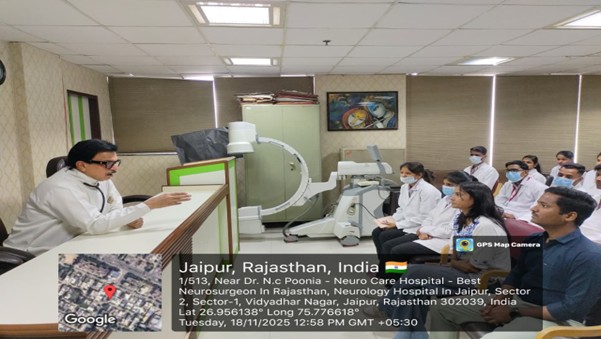
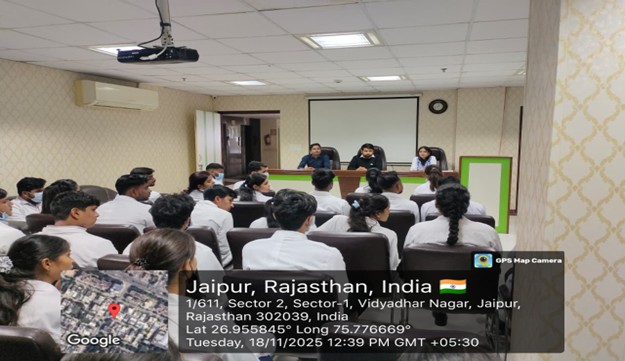
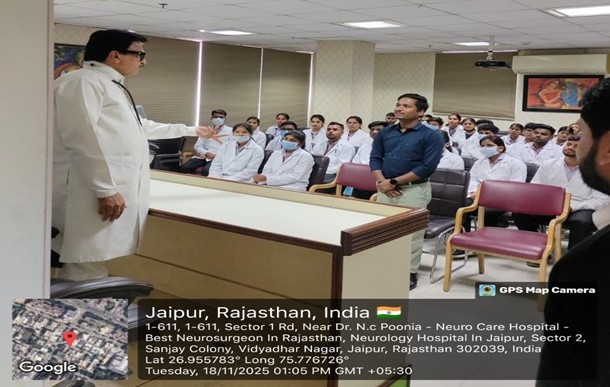
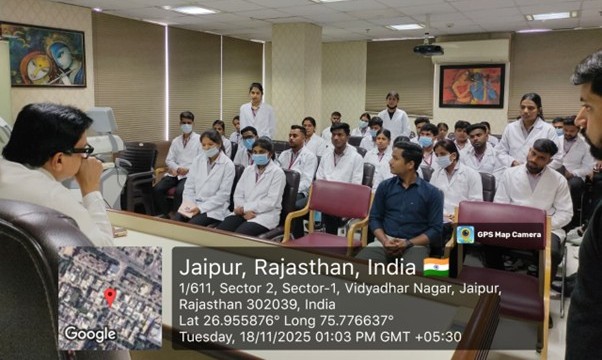
On 18th November 2025, the 3rd year BPT students visited Neuro Care Hospital as a part of their clinical exposure program. The primary focus of this visit was to enhance their understanding of neuro-rehabilitation and hospital-based physiotherapy services. Students were introduced to a wide range of neurological cases including Spinal Cord Injuries, Road Traffic Accident (RTA) cases with neuro complications, Cerebral Palsy, and Brain Haemorrhage patients. This helped them correlate classroom knowledge with real clinical scenarios.
The visit was well-guided by Dr. N.C. Poonia (Neurosurgeon), who detailed the clinical features of the patients and explained various therapeutic interventions used in neurological rehabilitation. Dr. Ajay Agarwal (Senior Operational Manager and Physiotherapist) provided an in-depth explanation of the hospital management system, including department coordination, patient admission, documentation workflow, and roles of different healthcare professionals.
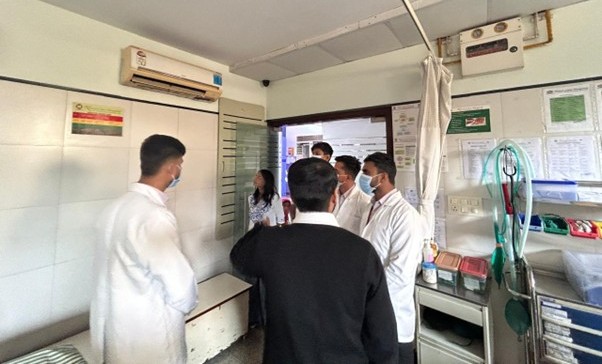
A significant part of the visit was the Operation Theatre orientation, where students learned about maintaining sterility, safe handling of surgical instruments, and different sterilization methods. They also gained awareness of safety protocols practiced in laboratories to prevent contamination.
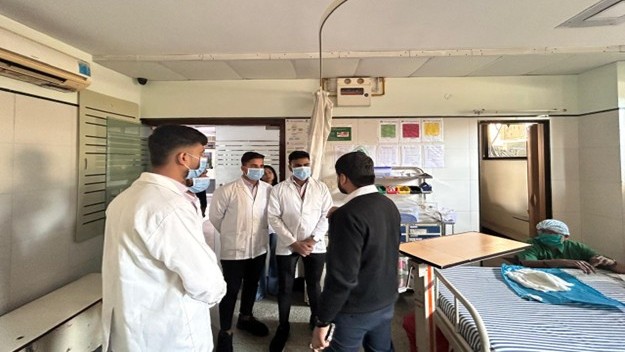
An introduction to the CMA machine helped students understand how patient parameters and monitoring systems support clinical decision-making. In the ICU, students observed ventilators and learned the basics of assisted respiration and life-support care. They also visited the post-operative recovery room where post-surgical monitoring and physiotherapy relevance in early recovery were discussed.
The tour concluded with a detailed observation of the OPD area and the Physiotherapy Lab, where students saw various rehabilitation equipment and understood the importance of physiotherapy in restoring functional independence.
Outcome
After the successful completion of the hospital visit, the students were able to:
- Identify and describe major neurological conditions observed in clinical practice.
- Demonstrate understanding of sterilization techniques and infection control protocols.
- Explain fundamentals of ICU care including ventilation and patient monitoring.
- Recognize the significance of physiotherapy in neuro-recovery and hospital setup.
- Strengthen clinical reasoning skills through direct interaction with medical professionals and real patient environments.
Observation
- Students observed OT sterilization protocols, safety guidelines, and learned methods of sterilizing surgical instruments.
- Orientation on the CMA machine increased their understanding of crucial medical monitoring technology.
- ICU visit helped students understand basic ventilation procedures and the care required for critically ill patients.
- In the post-operative room, students learned about patient monitoring techniques and recovery procedures.
- The workflow of hospital administration and patient handling was demonstrated.
- In the OPD and Physiotherapy Lab, students observed the rehabilitation equipment and the role of physiotherapy in patient recovery.
Conclusion:
The hospital visit provided valuable practical exposure and strengthened the students’ understanding of neuro-rehabilitation and hospital operations. The guidance and interaction sessions with professionals helped clarify clinical doubts and improved their confidence in handling neurological patients. Overall, the visit was highly informative and contributed effectively to their professional learning.