
Department of Naturopathy & Yogic Sciences
- Home
- Faculties
- Medical, Allied and Healthcare Sciences
- Department of Naturopathy & Yogic Sciences
- NYS Workshops/Conference
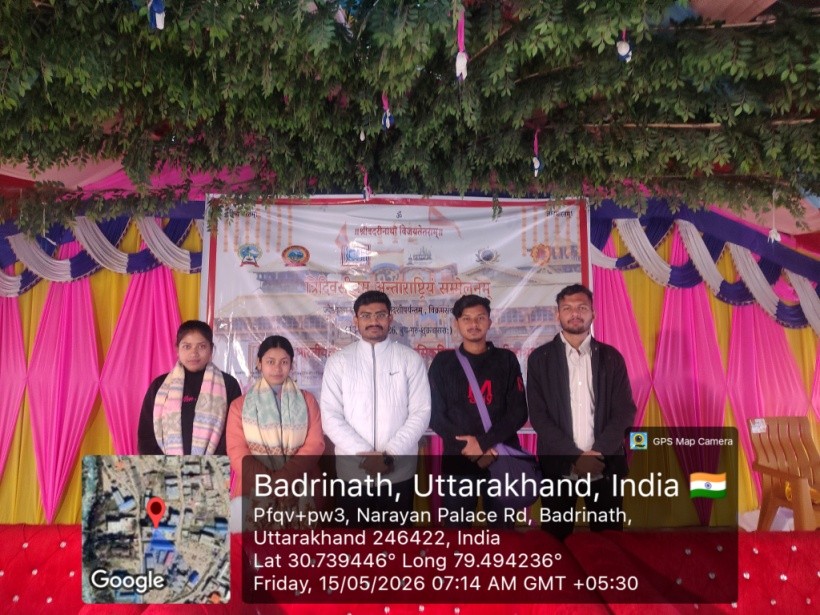
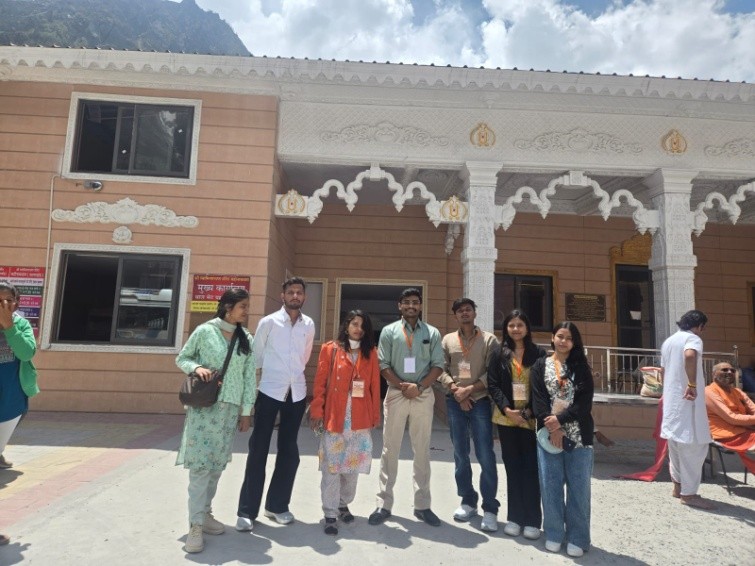
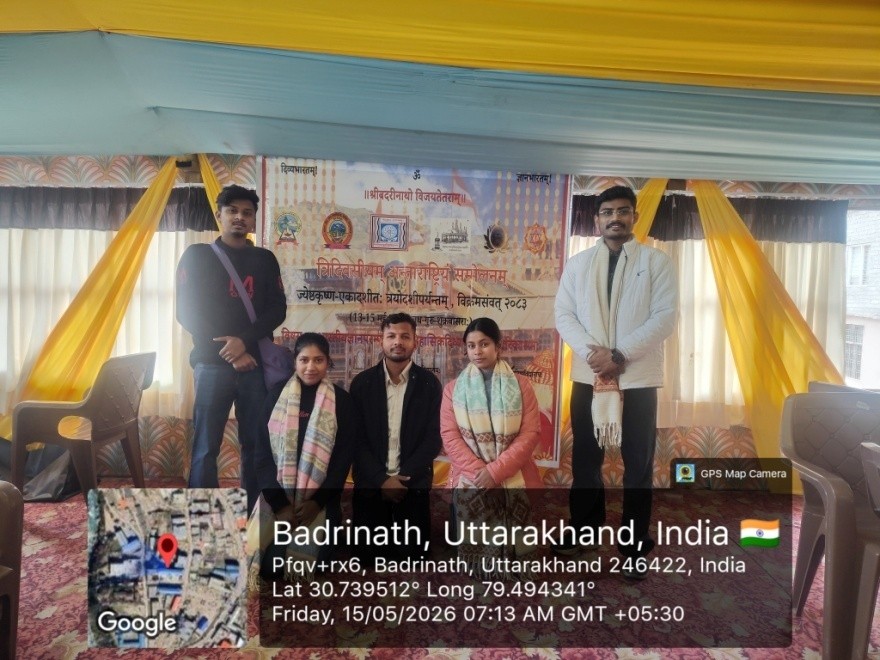
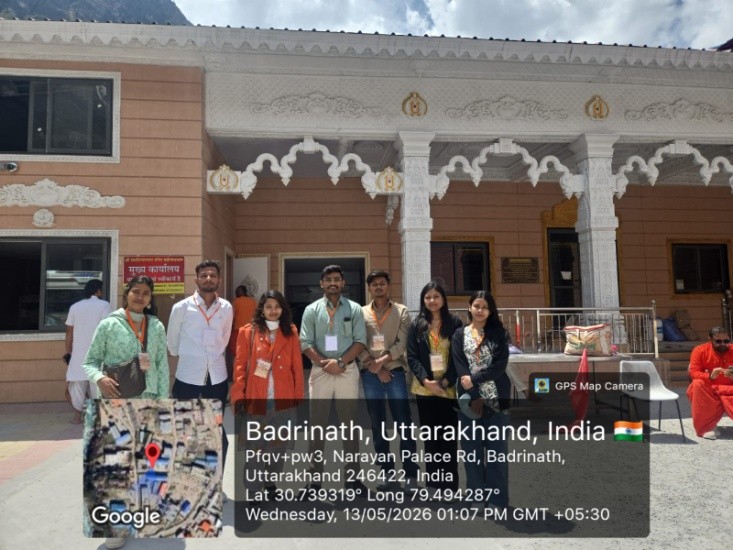
Conference at Badrinath
- Name of the Activity: Three Days International Conference
- Title/Theme of the Activity: Historical Divine Land of the Indian Knowledge System
- Date: 13th–15th May 2026
- Time: 09:00 AM to 04:00 PM (Daily)
- Venue: Srī Badrikāśrama, at Śrī Badrinath Dhāma, Uttarakhand
- Mode: Offline
- Organized by: Central Sanskrit University
Objectives of the Activity
- Focus on Indian Knowledge Systems (IKS), including Vedas, Upanishads, Yoga, Ayurveda, and spiritual traditions.
- Emphasis on Yoga, consciousness studies, and holistic health approaches.
- Integration of philosophical, cultural, historical, and scientific dimensions.
-
Special sessions on:
- Yoga & Ayurveda in contemporary healthcare.
- Spiritual psychology and pilgrimage science.
- Himalayan traditions and cultural heritage.
- Paper & poster presentations with publication opportunities (ISBN/ISSN).
- Exposure to experiential learning through spiritual practices and field visits, including Śrī Badrinath Dham Darshan, Mana Village, Saraswati River, Vyasa Cave, and other significant sites.
Day 1: Wednesday, 13 May 2026 | Ekādaśī
Venue: Shri Swaminarayan Mandir
Theme: Inauguration & Scholarly Foundations
The conference began at 7:00 AM with Vaidika Maṅgalam_ and ViṣṇuSahasranāma Pāṭha, invoking blessings for the scholarly gathering.
Key Sessions:
-
Inaugural Session (10:00 AM – 12:00 PM)
- Chair: Prof. Ramakant Pandey, Vice-Chancellor, Uttarakhand University, Haridwar
- Coordinator: Dr. Pradeep Semwal
- The session formally opened the conference, emphasizing Badrinath’s role as a historic center of Indian knowledge traditions.
-
Session I (12:00 PM – 1:30 PM)
- Topic: Śrī Badarikāśrama & Śrī Badrinath Dham
- Chair: Pt. Jagmohan Shastri
- Research papers explored the historical, scriptural, and spiritual significance of Badarikashram.
-
Session II (2:30 PM – 4:00 PM)
- Topic: 108 Divya Deśas in Vaiṣṇava Bhakti Tradition & Badarīkṣetra Vaibhavam in Bhakti Yoga
- Chair: Acharya Chakravarti Ranganathan
- Coordinator: Manoj Kumar Gahtori
- 5 papers by faculty members examined Badrinath’s place among the 108 Divya Deśas and its link to Bhakti Yoga.
-
Session III (4:30 PM – 6:00 PM)
- Topic: Jyotiṣa & Tīrtha Sevana
- Chair: Prof. P. V. B. Subramanyam
- Coordinator: Dr. Richa Singh
- 5 faculty papers discussed astrological aspects and the merit of pilgrimage.
- 3 days Exhibition of Spiritual Books, Veda , Upanishads and Puranas
Day 2: Thursday, 14 May 2026 | Dvādaśī
Venues: Shri Swaminarayan Mandir & Yog Hotel
Theme: Intensive Research Presentations
The day began with Śrī Badrinath Darśanafrom 5:00 AM - 7:00 AM for all delegates.
Parallel Academic Sessions: Due to 120+ papers, sessions ran simultaneously at two venues from 9:30 AM - 6:00 PM.
At Shri Swaminarayan Mandir (Faculty Presentations):
- Chaired by Prof. Shailesh Kumar Tiwari, Prof. Banamali Biswal, Prof. Arunachalam, Dr. Chakravarti Ranganathan.
- Total: 60 papers by faculty on aspects of Badarikashram, Vaishnava philosophy, Sanskrit literature, and Indian knowledge systems.
- At Yog Hotel (Research Scholar Presentations):
- Coordinated by Dr. Parul Pant, Dr. Pradeep Kumar Sokhal, Dr. Buddhadev Bhattacharya, Prof. Shekhar Chandra Joshi and others.
- Total: 90 papers by research scholars, showcasing emerging work on texts, rituals, geography, and cultural studies related to Badrinath.
Day 3: Friday, 15 May 2026 | Trayodaśī
Venue: Shri Swaminarayan Mandir
*Theme*: _Experiential Learning & Valedictory_
-
Saraswati Yatra (8:30 AM – 1:00 PM)
- Delegates visited Mana Village (India's first village), the origin of the Saraswati River, and Vyasa Cave, where Maharishi Vyasa is believed to have composed the Mahabharata.
- This field visit connected textual studies with the sacred geography of the Himalayan region, providing participants with an enriching experiential learning opportunity.
-
Valedictory Session (2:30 PM – 3:30 PM)
- Chair: Prof. Ramakant Pandey, Vice-Chancellor, Uttarakhand University
- Coordinator: Dr. Pradeep Semwal
- The session summarized the conference outcomes, highlighted over 120 research contributions, and resolved to publish the conference proceedings.
- The significance of Badrinath as a living Divyabhūmi (sacred land) of Indian Knowledge Systems was reaffirmed.
The conference blended academic deliberations with immersive spiritual experiences at one of India’s Char Dham sites. Key events conducted:
-
SriBadrinath Darśana
- Delegates began with darśana at the ancient Badrinath Temple dedicated to Lord Vishnu.
- The visit highlighted the temple's 8th-century origins, the role of Adi Shankaracharya, and its significance in Sanatana Dharma.
- Scholars connected the temple's architecture and rituals with India's living spiritual tradition.
-
Alakananda Aarti
- An evening aarti was performed on the banks of the Alakananda River.
- Priests chanted Vedic hymns while delegates participated by offering lamps.
- The event highlighted the sacred geography of the Himalayas and the ecological and cultural significance of rivers in Indian civilization.
-
Deepdaan in Gangaji (Offering of Lamps)
- Delegates offered floating lamps in the Alakananda, symbolically addressed as Gangaji in the region.
- The ritual emphasized gratitude towards water bodies and collective prayers for global peace.
- International participants witnessed and appreciated this sacred tradition.
-
Tarpana Ritual at Brahmakapāla
- A guided tarpana ceremony was conducted at Brahmakapāla, a revered site for ancestral rites.
- Experts explained its scriptural foundation in the Garuda Purana and its psychological significance in honoring one's lineage.
- Many delegates observed or participated, gaining an intercultural understanding of Pitr Yajna.
-
Vaisnava Bhajana Sandhya
- The evening featured traditional bhajana and Vaiṣṇava kīrtanas dedicated to Lord Badri Vishal.
- International scholars highlighted the role of nāma-saṅkīrtana in Bhakti traditions.
- The session demonstrated the unifying spiritual power of devotional music across cultures.
-
Visit to Mana Village, Saraswati River, and Vyasa Cave
- Delegates participated in an academic and cultural excursion to Mana, India's first village.
- The visit included the origin of the Saraswati River and Vyasa Cave, traditionally believed to be the place where Maharishi Vyasa composed the Mahabharata.
- The excursion connected geography, archaeology, and epic literature, highlighting Badrinath's enduring place in India's intellectual and cultural heritage.
Outcomes of the programme/activity
The conference successfully established Shri Badarikashram not only as a pilgrimage site but as an Aitihāsika Divyabhūmi - a historic sacred land integral to Bharatiya Jñāna Paramparā. It bridged text and practice, scholarship and devotion, setting a model for IKS-based academic events.
The conference successfully integrated scholarly dialogue with experiential learning. Events reinforced Badrinath’s status not only as a pilgrimage center but as a site of philosophical, ecological, and literary importance, fostering cross-cultural appreciation of India’s spiritual legacy.
- Academic Outcomes120+ Research Papers Presented: 60 by faculty members and 60 by research scholars across 7 parallel sessions, covering Badarikashram’s history, scriptural basis, Vaishnava tradition, Jyotisha, pilgrimage studies, and literary sources.Interdisciplinary Dialogue: Brought together Sanskritists, historians, theologians, geographers, and cultural studies scholars to examine Badrinath as a Divyabhūmi of Indian Knowledge Systems.Documentation: Resolved to publish peer-reviewed conference proceedings to serve as reference material on Badarikashram for future researchers.
- Experiential & Cultural OutcomesIntegration of Śāstra and Tīrtha: Combined rigorous paper presentations with Badrinath Darśana, Alakananda Aarti, Deepdaan, Tarpana at Brahmakapāla, and Bhajana Sandhyā, demonstrating the living nature of textual traditions.Field Exposure: Saraswati Yatra to Mana Village, Saraswati River origin, and Vyasa Cave connected epic geography with academic discourse, validating Badrinath’s role in Mahabharata and Purāṇic traditions.
Relevance and Applicability
The conference highlighted the practical application of yoga and naturopathy in modern wellness, offering valuable insights for students to integrate natural healing into their future practices.
Overall Rating
- Excellent: 80%
- Very Good: 15%
- Good: 5%
Conclusion
The 3-day International Conference provided valuable learning opportunities for students, fostering a deeper understanding of natural healing practices. The event successfully promoted the integration of yoga and naturopathy, concluding with recognition and celebration of participants' contributions.