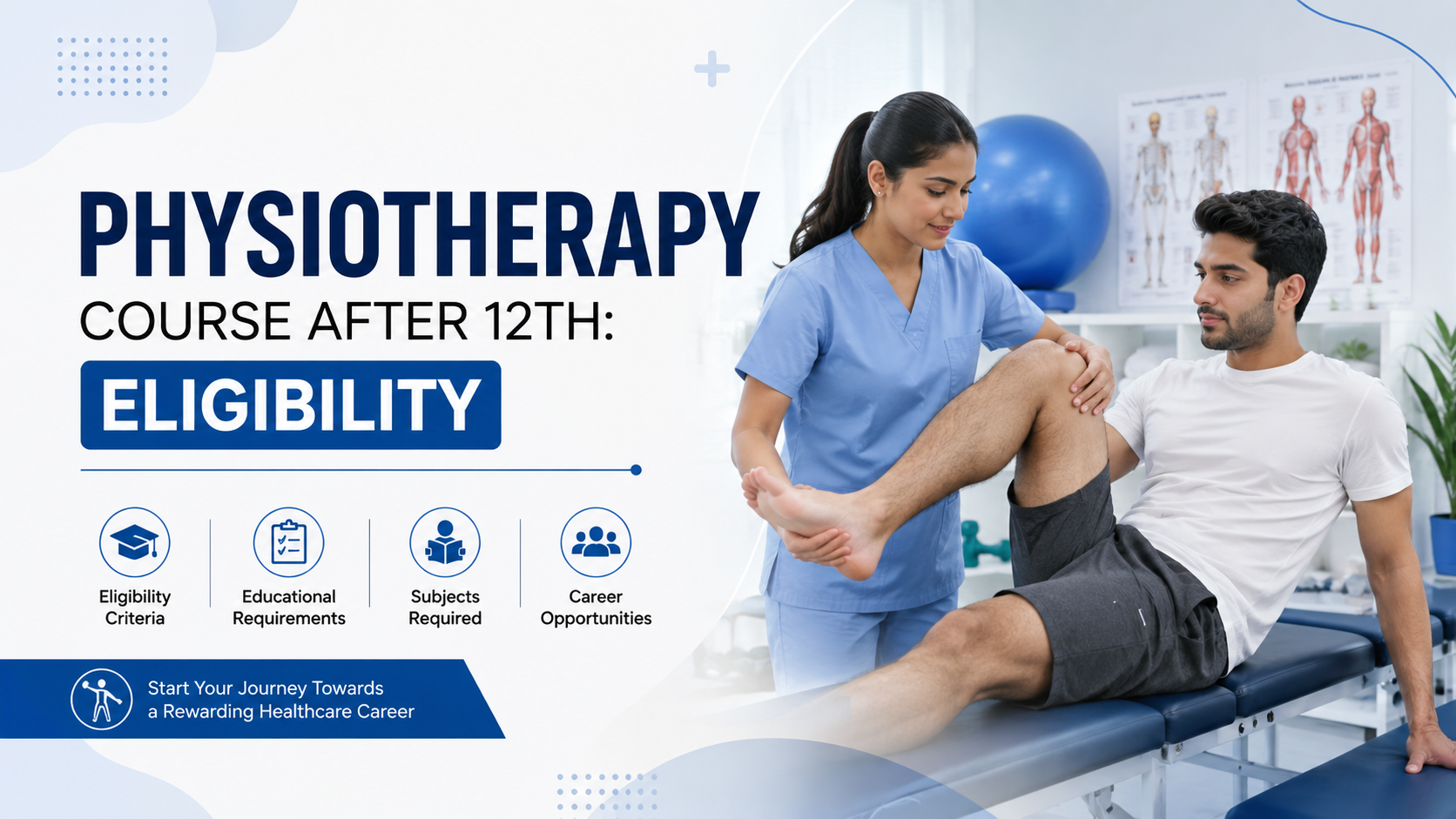
Physiotherapy has evolved from being a niche paramedical field to emerging as one of the rapidly growing healthcare careers in India, owing to increased awareness towards rehabilitation, sports medicine and post-operative recovery care. This is everything that you need to know about eligibility, the entrance exam process, course structure, and most interestingly what really happens in Bachelor of Physiotherapy (BPT) after Class 12.
What Is BPT (Bachelor of Physiotherapy)?
BPT is an undergraduate paramedical program centers on assessing, diagnosing and managing physical impairments, disabilities, and pain through therapeutic techniques including manual therapy, exercise therapy and electrotherapy. It is usually a course of 4 to 4.5 years, which usually includes 4 years of academic training followed by a compulsory rotatory internship for clinical experience (of 6 months).
Eligibility Criteria for Physiotherapy Course After 12th
Broad eligibility requirements across most recognized institutions:
- Completed Class 12 (or Equivalent): From a recognized board with Physics, Chemistry, and Biology as core subjects.
- Minimum Aggregate of 50% Marks: In PCB (45% in case of SC/ST candidates, the relaxation varies from institution to institution).
- At Least 17 Years Old: At the time of the application.
- Valid NEET UG Score: Mandatory for BPT admission all over India under the NCAHP (National Commission for Allied and Healthcare Professions) Act.
Is NEET Compulsory for BPT Admission?
Yes. According to the latest NCAHP norms, NEET UG is compulsory for BPT admission at any recognized college/ university in India, there isn't a second entry path. BPT admission is not open to candidates who have not appeared for NEET UG irrespective of Class 12 marks. Depending on the admission process of the institution, selection is usually made from a merit list prepared according to NEET scores and/or Class 12 marks.
BPT Course Structure
- Years 1–4: Major topics include: Gross Anatomy, Physiology, Biochemistry, Kinesiology, Pathology, subjects specific to Physiotherapy including Exercise Therapy, Electrotherapy, Manual Therapy, and Community-Based Rehabilitation.
- Introduction of Hands-on Clinical Postings in 2nd Year: You are exposed to clinical experience from this early stage.
- 6-Month Internship: A compulsory rotatory internship in a hospital or clinical setup (approximately after the 4th year), conducted under supervision to provide practical patient-care experience.
Strict minimum attendance requirements under NCAHP norms typically 75% in theory classes, 85% in clinical/practical postings.
BPT Course Fees in India
The fees are divided as following depending on the type of institution:
- Government Colleges: Most inexpensive, usually less than ₹1 lakh per annum.
- Private Universities: Roughly ₹75000–1 lakh / yr; close to an aggregate of 3–5 lacs for the total 4.5 years.
- Premier Private Institutes: can reach even higher as per infrastructure/hospital tie-ups.
Many universities are also making merit-based staff with some even providing additional scholarships for female aspirants as well and the National Scholarship Portal which provides Government-funded scholarships to SC/ST/OBC aspirants (national/state mediums).
Career Scope After BPT
Physiotherapy is a profession that has many opportunities for careers in both clinical and non-clinical settings:
- Hospital: Government and private hospital physiotherapy services.
- Sports Medicine: Working with athletes and sports teams for injury prevention and recovery.
- Rehabilitation: general and specialized rehab for neurological, ortho, cardiopulmonary settings.
- Private Practice: a significant number of physiotherapists end up establishing their own clinics or working as mobile physiotherapists.
- Corporate Wellness: There is a rising trend with companies investing in workplace health programs.
- Post Graduation: MPT in orthopedic, neuropsychological, sports medicine or cardiopulmonary physiotherapy, MBA in Hospital Management
Physiotherapy Salary in India (2026)
Role/Level |
Typical Salary (per annum) |
|---|---|
| Fresher physiotherapist (hospital/clinic) | ₹2.5 – ₹4 lakh |
| Experienced physiotherapist (3–5 years) | ₹5 – ₹8 lakh |
| Sports/specialized physiotherapist | ₹6 – ₹10 lakh |
| Independent practice | Variable, scales with client base |
A degree of specialization (sports medicine, neuro-rehab), the MPT qualification, and exposure to working with hospitals or private clients directly really drive salary potential in this profession as well.
Studying BPT at JU Jaipur
Jagannath University Jaipur offers a 4.5-year Bachelor of Physiotherapy (BPT) ( BPT Course )(4 years of academic training plus a 6-month rotatory internship), with admission based on NEET UG as per NCAHP regulations. Eligibility requires Class 12 with Physics, Chemistry, and Biology and a minimum of 50% aggregate marks (45% for SC/ST candidates). The program includes early clinical exposure from the 2nd year onward, training in modern physiotherapy techniques and equipment, and merit-based scholarships — including additional scholarships for female students.
Ready to Start Your Design Career?
Explore the Bachelor of Physiotherapy (BPT) program at JU Jaipur and take the first step toward a rewarding career in physiotherapy and rehabilitation.