
BTech in Mechanical Engineering Course Details & Eligibility
Mechanical Engineering is one of the oldest and most diverse fields of a branch of engineering which deals with the concepts, design, manufacturing, maintenance and operation of machines and mechanical systems. Mechanical Engineers are the backbone of our technological and industrial development from automobiles to robotics till aerospace and energy industries.
B. Tech. - Mechanical Engineering (ME) is an option for students who want to pursue a career that deals with innovation, machines, manufacturing systems and problem-solving. It ensures good technical knowledge, hands-on exposure and good scope in lots of sectors.
Introduction to B.Tech in Mechanical Engineering
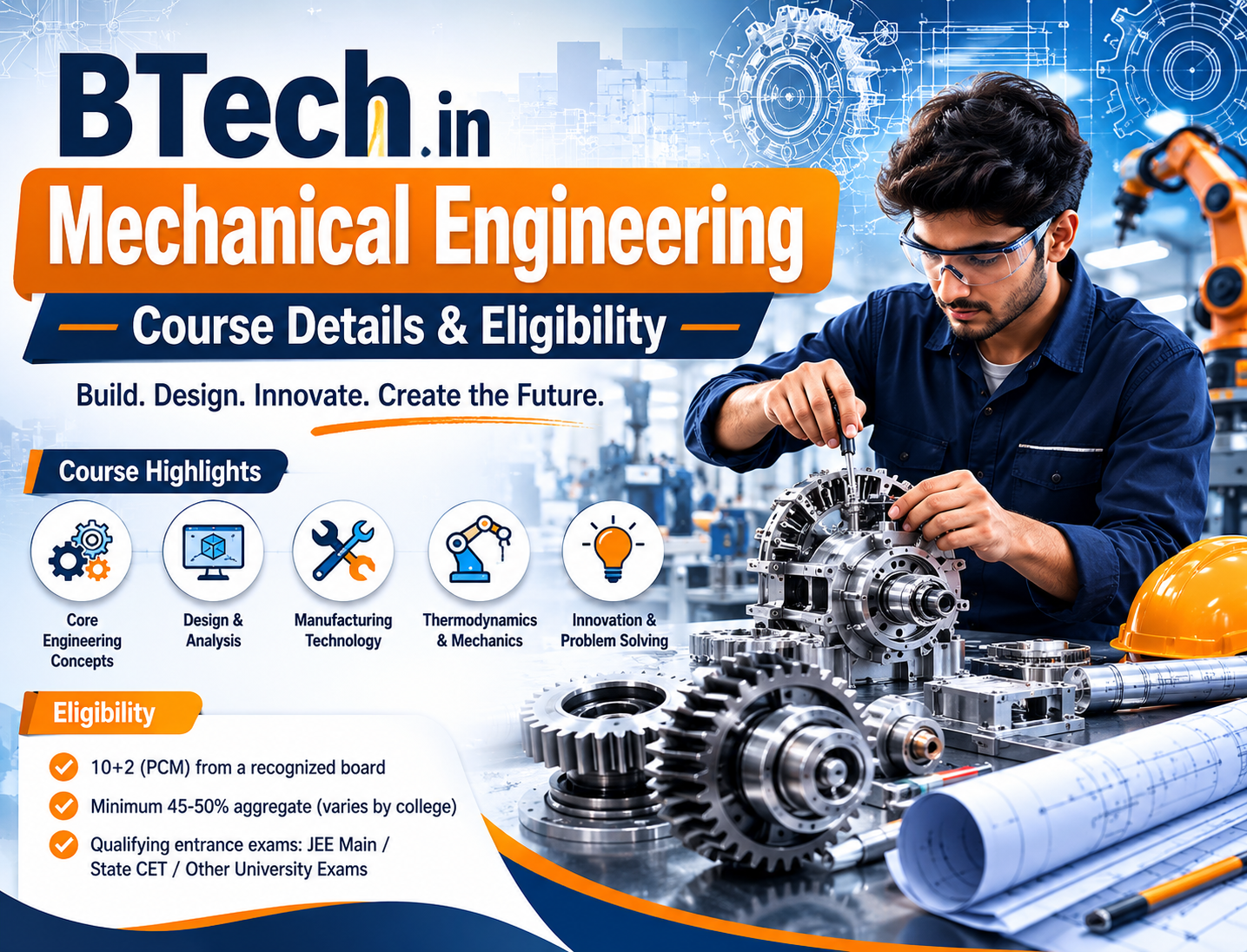
B. Tech. - Mechanical Engineering (ME) is a 4-year undergraduate engineering program where students learn skills in mechanics, thermodynamics, manufacturing technology, machine design and robotics, industrial engineering automation etc.
This specialisation focuses on techno-managerial aspects of the related Engineering domains that are provided through various course modules, rigorous laboratory training and workshops, industrial visits, internships and project based learning.
BTech in Mechanical Engineering Course Duration
B. Tech. - Mechanical Engineering (ME) course has the following durations :
- 4 Years
- Divided into 8 Semesters
Through every semester, a measure of Engineering subjects (core & elective), practical/workshops with assignments as well as professional field training remain intrinsic.
In order to be eligible to apply for this course, candidates must have passed Class 12 examinations in the relevant stream with at least 50% marks (45% for SC/ST) and should have studied Physics, Chemistry and Mathematics as compulsory subjects.
Eligibility Criteria for BTech in Mechanical Engineering
Basic Eligibility
- Completion of 10+2 from a recognized board
- Mandatory subjects: Physics, Chemistry, and Mathematics
- Relevant minimum qualifying marks prescribed by the college or university
- Entrance exam scores (if applicable)
- Some schools also provide direct admission based on merit and previous exam results
Admission Process for Mechanical Engineering
The BTech Mechanical Engineering programs are usually admitted through Entrance Exams
Popular entrance exams include:
- JEE Main
- JEE Advanced
- State-level engineering entrance exams
- University-specific entrance tests
Merit-Based Admission
- Some institutes give admission on the basis of Class 12 marks also
- Individual university guidelines will provide the detailed procedure of admission
Subjects in BTech Mechanical Engineering
It encompasses basic engineering as well as advanced mechanical and other topics.
Core Subjects
- Engineering Mathematics
- Engineering Physics
- Engineering Graphics
- Thermodynamics
- Fluid Mechanics
- Strength of Materials
- Machine Design
- Manufacturing Processes
- Heat Transfer
- Robotics
- Industrial Engineering
- Automobile Engineering
- CAD/CAM
Importance of Practical Training/Lab Work In the Course
Skills Required for Mechanical Engineering
Mechanical Engineering students must develop —
- Analytical thinking
- Problem-solving abilities
- Technical knowledge
- Creativity and innovation
- Communication skills
- Teamwork and project management
- Practical and design skills
Such capabilities are instrumental for students to excel in both technical and managerial positions.
BTech in Mechanical Engineering Career Scope
Mechanical engineering provides wider opportunities in private & government sectors.
Popular Job Roles
- Mechanical Engineer
- Design Engineer
- Production Engineer
- Maintenance Engineer
- Quality Control Engineer
- Automobile Engineer
- Robotics Engineer
- Thermal Engineer
- Manufacturing Engineer
Industries Hiring Mechanical Engineers
Job opportunities after the course for such students include but are not limited to:
- Automobile Industry
- Aerospace Industry
- Manufacturing Sector
- Robotics and Automation
- Power Plants
- Construction Industry
- Oil and Gas Sector
- Railways
- Defense Sector
Mechanical engineers are needed because practically every industry depends on machinery, production systems, and maintenance operations.
Higher Education Options After Mechanical Engineering
Students have options for higher studies such as:
- MTech in Mechanical Engineering
- Robotics and Automation Courses
- CAD/CAM Certifications
- Industrial Design Programs
- Research Programs
- MBA
Students also prepare for competitive exams and government engineering services.
Advantages of Choosing Mechanical Engineering
-
Diverse Career Opportunities
Mechanical Engineering graduates can work in a wide range of industries. -
Strong Technical Foundation
Develops engineering, manufacturing, and design knowledge. -
Innovation and Technology
Students learn about robotics, automation, AI integration, and modern manufacturing technologies. -
Government and Private Sector Opportunities
Both government and private sectors provide excellent entry-level job opportunities for mechanical engineers.
Future Scope of Mechanical Engineering
The field of Mechanical Engineering has seen enormous growth with advancements in Automation, Electric Vehicles, Renewable Energy Robotics and Smart Manufacturing.
Industries of present-day demand qualified professionals, engineers who can handle modern-day machinery such as automation systems and sustainable engineering sector technologies.
Conclusion
This combines the knowledge from a variety of fields including machines, innovation, production systems and industrial technologies.BTech in Mechanical Engineering students may consider altering their streams when applying to these programs. It offers excellent theoretical groundwork in various technical skills, practical exposure and ample job prospects across various sectors.
Due to the rising demand for automation, manufacturing, robotics and sustainability technologies, Mechanical Engineering is still one of the most sought-after engineering branches that are worthwhile pursuing an engineering degree in its field.