

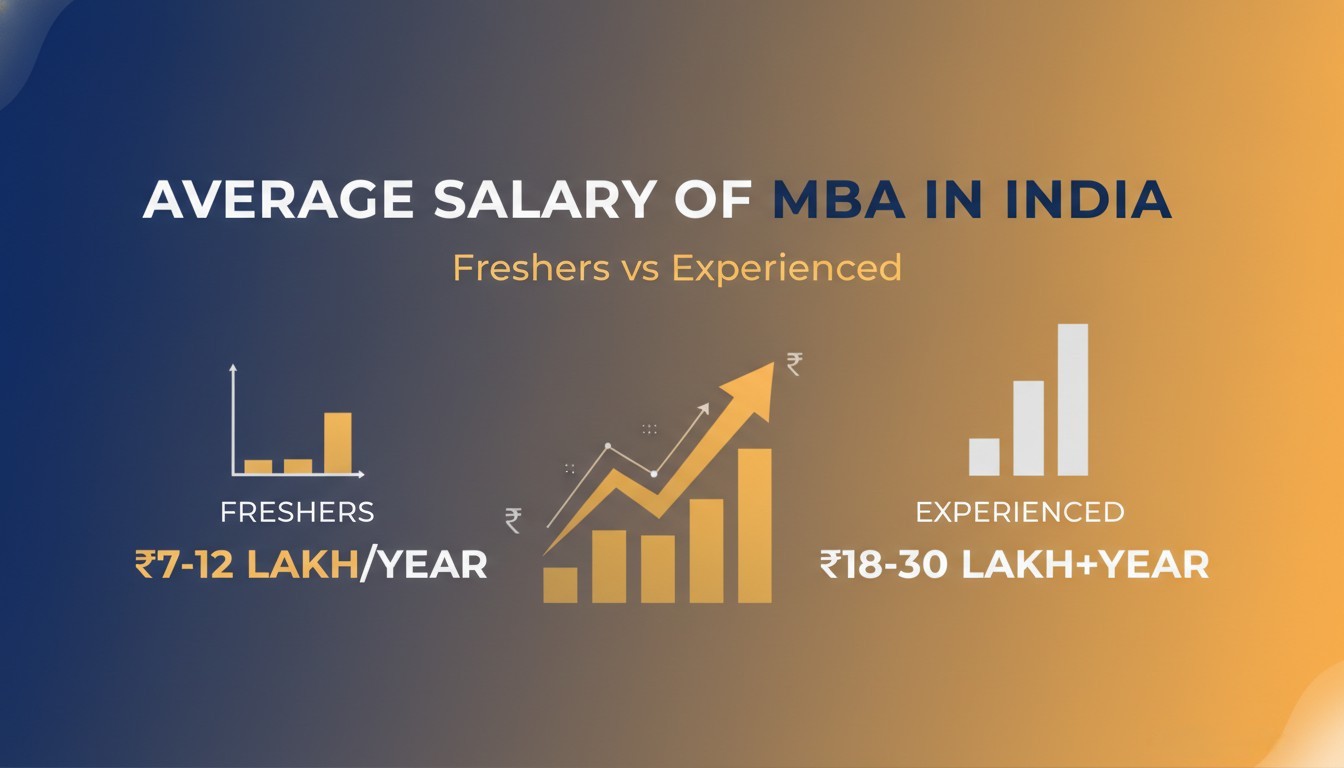
On one thing and one thing alone MBA salaries in India swing as dramatically as the heat of the day; which college you passed out from. For example, the average fresher from a Tier 3 B-school can work start from ₹3–6 LPA while a fresher from an IIM can start at around ₹20–35 LPA in the same hiring season — and that gap isn't narrowed by experience alone, taking many years to close.
India's average MBA salary in 2026 based on all colleges and work experience combined could be ₹8–12 LPA ₹4.5–9 LPA, Freshers (3–6 LPA from Tier 3 colleges; up to ₹20–35 LPA from IIMs and ISB). 3–6 Years- Experienced ₹12–20 LPA and even more for senior IIM/ISB graduates crossing 30–40 LPA or more.
MBA Salary in India: Freshers vs Experienced
Career Stage |
Average Salary Range |
Notes |
|---|---|---|
| Fresher — Tier 3 college | ₹3–6 LPA | Entry-level roles, smaller companies |
| Fresher — Tier 2 college | ₹8–16 LPA | Wider range depending on placement cell strength |
| Fresher — Tier 1 (ISB/XLRI/MDI) | ₹22–30 LPA | Strong recruiter base, consulting/finance heavy |
| Fresher — Top IIMs (A/B/C) | ₹28–35 LPA median | Highest packages can reach ₹1+ crore |
| Mid-level (3–6 years) | ₹12–20 LPA | Grows further with specialization and industry demand |
| Senior/Executive | ₹25–40 LPA+ | Executive MBA and blended programs common at this stage |
The figures are industry averages based on several 2026 placement and salary reports; individual offers will differ depending upon college, specialization, city and negotiations.
MBA Salary by College Tier
Institute tier is the single biggest driver of MBA salary in India: brand recognition, alumni networks and recruiter relationships stack at the top.
- Top IIMs (Ahmedabad, Bangalore, Calcutta): Average packages are generally ₹28–36 LPA, with top solutions regularly above ₹50 LPA and Highest ever offers nicely on the counts of ≥>₹1 crore.
- New/mid-tier IIMs: Average ₹14–20 LPA
- ISB, XLRI, MDI: Broadly comparable to the top IIMs- mostly in the ₹22–30 LPA range.
- Tier 2 B-schools: Expected ₹8–18 LPA.
- Tier 3 B-schools: In the range of ₹3–8 LPA, more time taken to recover program fees.
- Online/Distance MBA: Relatively lower, tend to stay at around ₹3.5–8 LPA for freshers and ₹12–20 LPA for experienced, depending on the NAAC A+ accredited program
MBA Salary by Specialization
Specialization affects starting salary almost as much as college tier does.
Specialization |
Typical Fresher Range |
|---|---|
Consulting |
Highest-paying overall, often ₹20–45 LPA at top firms |
Finance |
₹4–11 LPA broadly, significantly higher at top colleges |
Business Analytics / Data-driven roles |
Among the fastest-growing salary trajectories |
Marketing |
Competitive but generally trails Consulting and Finance |
Operations / General Management |
Broad range depending on industry |
What I have found through research is that Consulting, Finance and Business Analytics regularly feature as the specializations with the highest earnings while Marketing and Operations offer lower entry-level salaries but excellent long-term growth.
Why MBA Salaries Vary So Much
- Institute level and brand: IIM/ISB/XLRI branding, Alumni network and historical placement data influences recruiters to pay a higher price.
- Specializations: Consulting and Finance consistently pays more than General Management and Marketing at entry-level
- Work experience: Reserve work knowledge to train an MBA system with 2—three years of prior adventure tends to negotiate higher beginning programs than the ones coming at once from undergraduate learn.
- Industry and city: Senior roles in consulting, Bfsi and tech — especially those based in Metro cities — tend to be paid higher under the same size of companies.
- Full-time vs Online/Executive: Full-time MBAs from accredited campuses typically earn more than their distance or online-only counterparts—but the gap narrows for high-level professionals seeking the formalization of an MBA for a skill they have already mastered.
Is an MBA Still Worth It in 2026?
For candidates from strong institutes and in-demand specializations, yes — MBA salaries have grown at a healthy pace and openings for MBA-qualified roles have continued to expand. For candidates from lower-tier colleges, the return depends heavily on program fees versus expected starting salary: a Tier 1 IIM's higher fees are often recovered within the first year of employment, while a Tier 3 college's lower fees can still take several years to recover given a smaller starting salary.