
Admission Process for Civil Engineering After 12th
Civil Engineering is one of the most preferred branches in engineering as you will learn about design, construction and maintenance of all types of infrastructure starting from buildings to roads, bridges, dams, airports and smart cities. The aspiring engineering students looking for construction, architecture, planning and development of natural and physically built environment then join the civil engineering after completing their Class 12.
Once students completely understand the admission process for Civil Engineering After 12th, it helps them prepare themselves efficiently for eligibility criteria, entrance exams and college selection.
What is Civil Engineering?
B. Tech. - Civil Engineering (CE) is a professional engineering discipline that deals with the planning, designing, construction and maintenance of Nigerian physical infrastructure and public works projects.
It combines technical knowledge with hands-on training and project-based learning.
Eligibility Criteria for Civil Engineering After 12th
Eligibility Criteria for B. Tech. - Civil Engineering (CE) Programs Students need to fulfill basic criteria in order to be eligible for admission into B.Tech programs.
Basic Eligibility
- Completion of 10+2 from a recognized board
- Physics, Chemistry, and Mathematics as compulsory subjects in graduation
- Minimum qualifying marks as per the respective college or university requirements
- Valid score in an entrance exam (if applicable)
While others allow an exemption from the admission policy and reservation according to some institutions.
Course Duration
Duration of the BTech Civil Engineering Course:
- 4 Years
- Divided into 8 Semesters
The training is a blend of lectures, hands-on labs, field training, workshops and industry exposure.
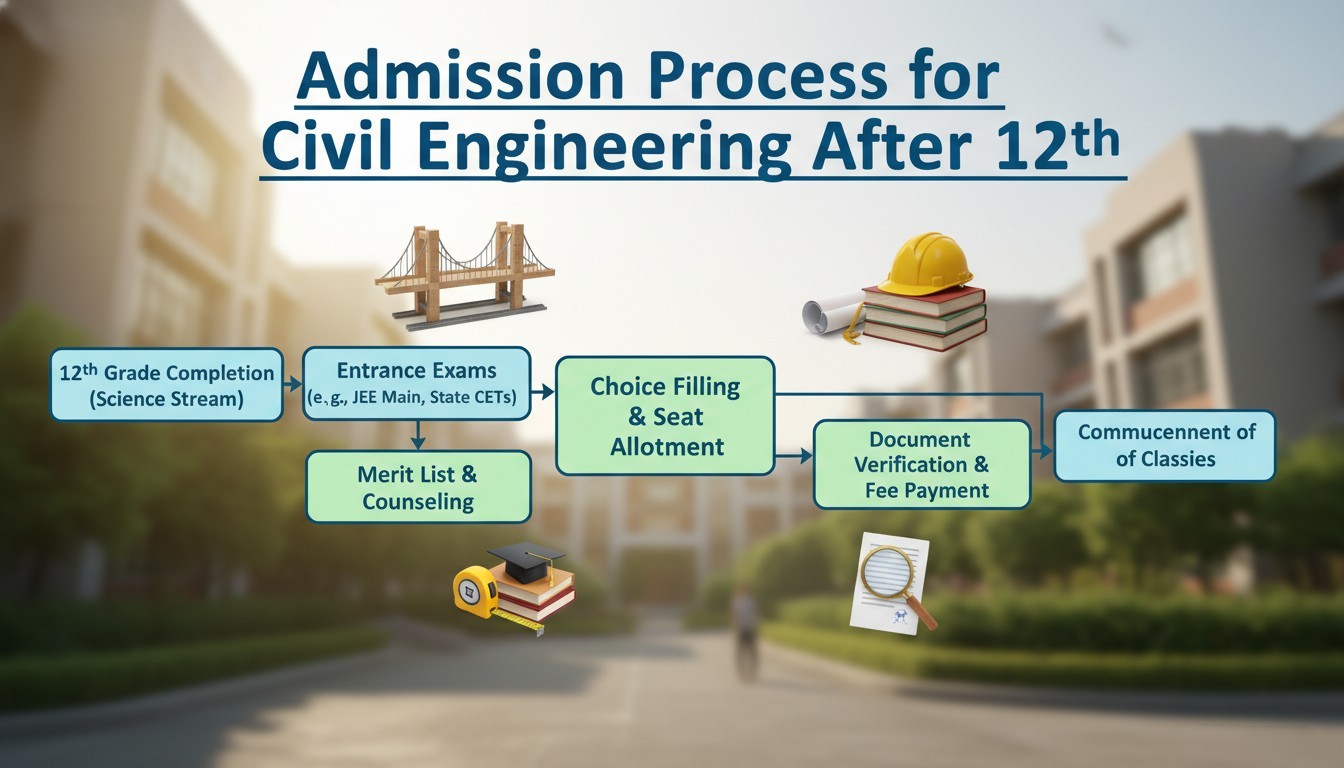
Admission Process for Civil Engineering After 12th
Civil Engineering courses are conducted through entrance exams or on the basis of merit.
Appear for Entrance Exams
Admission to be pursued based on engineering entrance exam scores granted by most colleges/universities.
Popular Entrance Exams
- JEE Main
- JEE Advanced
- State-level engineering entrance exams
- University-specific entrance tests
To succeed in such exams students should prepare subjects like Physics, Chemistry and Mathematics.
Fill Out Application Forms
Once the entrance exam results are declared, students apply to colleges and universities through :
- Online application forms
- Counseling portals
- University admission websites
Students beforehand apply should check their eligibility criteria, application date and necessary documents.
Participate in Counseling Process
Generally the counseling process is being held for getting admission in Engineering, where students gets allotted with college depending on:
- Entrance exam rank
- Category reservation
- Seat availability
- College preference
Counseling may be national level or state level or university level.
Document Verification
During admission, students have to submit important documents.
Common Documents Required
- Class 10 Marksheet
- Class 12 Marksheet
- Entrance Exam Scorecard
- Identity Proof
- Passport-size Photographs
- Transfer Certificate
- Category Certificate (if applicable)
Seat Confirmation and Fee Payment
Students have to:
- Pay admission fees
- Confirm their seat
- Complete enrollment formalities
After finishing the admission process, students can then get started with their Civil Engineering course.
Subjects in Civil Engineering
There are technical and practical subjects related to infrastructure and construction in the subject areas covered on the course.
Core Subjects Include
- Engineering Mathematics
- Building Materials
- Structural Engineering
- Surveying
- Environmental Engineering
- Transportation Engineering
- Fluid Mechanics
- Geotechnical Engineering
- Construction Technology
- Concrete Technology
The curriculum also includes practical workshops and field visits.
Skills Required for Civil Engineering
Civil Engineering students need to build:
- Analytical thinking
- Problem-solving abilities
- Technical drawing skills
- Communication skills
- Creativity and planning abilities
- Project management skills
These skills enable students to find solutions for construction and infrastructure projects.
Career Opportunities After Civil Engineering
Civil Engineering is referred to in both private and government sectors.
Popular Job Roles
- Civil Engineer
- Structural Engineer
- Site Engineer
- Construction Manager
- Transportation Engineer
- Environmental Engineer
- Project Engineer
Industries Hiring Civil Engineers
Graduates can work in:
- Construction Companies
- Infrastructure Development Firms
- Government Departments
- Railways
- Smart City Projects
- Real Estate Companies
- Highway and Transportation Projects
Advantages of Choosing Civil Engineering
Strong Career Opportunities : Heavy civil construction and urbanisation continue to place demands on civil engineers.
Practical Learning : Fieldwork and projects provide students with practical experience.
Government Job Opportunities : Candidates passing from Civil Engineering stream can fill various government engineering jobs and public sector vacancies.
Contribution to Society : Civil engineering involves improving public works and amenities in order to make a societal impact.
Future Scope of Civil Engineering
The upcoming aspects of Civil Engineering can be broadly classified as follows :
- Smart city development
- Urban infrastructure expansion
- Sustainable construction
- Green buildings
- Transportation and highway projects
The skilled civil engineers are offered with new opportunities by modern technologies and sustainable engineering practices.
Conclusion
This is a good career field for students who have an interest in construction, infrastructure and development projects. Knowledge is Power No matter how complicated, the Class 12 admission process — specifically around entrance tests, choice of colleges and Career Decisions — Study unveils its truth so you can make well-informed decisions.
As infrastructural and smart developmental projects keep jumping the line, B. Tech. - Civil Engineering (CE) also guarantees healthy career progression along with professional opportunities.